Series of street shops in HCM City close
Series of street shops in HCM City close
Experts recommend that landlords and tenants collaborate on adaptive strategies, such as adjusting rental expectations and exploring hybrid business models, to ensure profitability and competitiveness in a changing marketplace.
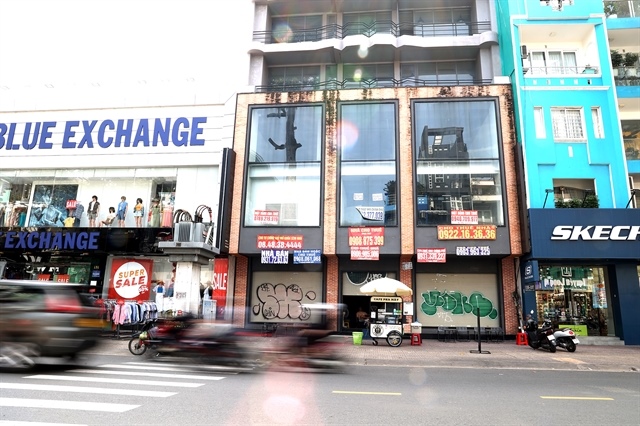
A shop in HCM City. Many shops on main streets in HCM City have closed and returned shops to landlords. — VNA/VNS Photo An Hiếu |
Many shops on main streets in HCM City have closed and returned shops to landlords despite the fact that the year-end shopping season is approaching.
This trend is noticeable in various wards across the city, particularly in prominent areas such as Sài Gòn, Bến Thành, Xuân Hòa, Vườn Lài, Chợ Quán, and Chợ Lớn, where leasing boards are prevalent.
The decline in business activity has spread to streets formerly known as shopping paradises, like Cách Mạng Tháng Tám, Lý Tự Trọng, Đồng Khởi, Hai Bà Trưng, Nguyễn Trãi, Nguyễn Đình Chiểu, and 3 Tháng 2. Many shops in these areas have closed down, some displaying signs for sale or lease, contributing to the deterioration of urban aesthetics due to prolonged vacancies.
Real estate brokers have reported that rental prices on central streets in HCM City vary from around VNĐ100 million (US$3,800) to VNĐ300 million ($11,400) per month, depending on size and location. For example, on Nguyễn Trãi Street, a once vibrant "fashion capital" of HCM City, the bustling business atmosphere has significantly declined.
A fashion store owner mentioned that previously busy stretches, like from house numbers 2 to 31 on Nguyễn Trãi Street, now have few operational stores amidst lingering closures and vacancies.
The rental prices on Nguyễn Trãi Street typically start from VNĐ50 million ($2,200) per month, excluding fixed expenses like staff, taxes, electricity, water, etc, according to the owner.
The ongoing challenges in the business landscape, exacerbated by the COVID-19 pandemic, have led to a decrease in customer traffic and a shift towards online shopping due to economic difficulties. This has resulted in decreased purchasing power and increased competition from online platforms, leading to significant operational hurdles for traditional brick-and-mortar stores.
"The costs are very high, while the number of customers is decreasing. Additionally, the prolonged economic difficulties have reduced purchasing power, while the surge of social media and e-commerce has made online prices much lower than traditional stores," he noted.
Nguyễn Đông Dương, a representative of the Vietnam Real Estate Brokers Association, highlighted the mismatch between high rental prices and the actual performance of businesses, particularly in retail, F&B, and service sectors.
Dương stressed the importance of adapting to the evolving market conditions, recommending that landlords adjust rental rates, offer flexible terms, and collaborate with tenants to navigate the challenging landscape.
"The main reason is that rental prices are stuck at high levels, no longer in line with actual cash flows. Furthermore, the market is undergoing a cleanup of inefficient business models and rental prices that are no longer suitable for the current environment," Dương assessed.
The closure of street shops has accelerated post-COVID-19 with the rise of online shopping, prompting a reevaluation of factors influencing business success. The shift towards prioritising cost efficiency, customer experience, operational flexibility, and supporting amenities has steered many businesses, particularly in the F&B sector, toward shopping centres that offer flexible rental options and revenue-sharing opportunities.
In light of the current situation, experts recommend that landlords and tenants collaborate on adaptive strategies, such as adjusting rental expectations and exploring hybrid business models, to ensure profitability and competitiveness in a changing marketplace.
The ongoing transformation in the street shop market signals a natural selection process, where properties that fail to meet operational standards and cost-efficiency will be phased out of the commercial landscape, reshaping the urban retail sector for future sustainability.
Based on this reality, Dương emphasised the need for proactive adjustments by landlords, flexible payment terms, and sharing risks with tenants to sustain space utilisation. On the business side, restructuring of business models, optimising space utilisation, and selecting locations based on actual effectiveness rather than solely focusing on "prime locations" would be essential.
Additionally, Dương suggested the necessity of appropriate tax policies and conversion support for prolonged empty spaces to avoid urban resource wastage and facilitate a sustainable market recovery.
- 08:36 31/12/2025