Firms advised to adapt to new EU standards to sustain exports
Firms advised to adapt to new EU standards to sustain exports
The EU is now tightening requirements to ensure that imported products comply with the same strict food safety, environmental and animal welfare standards applied within the bloc.
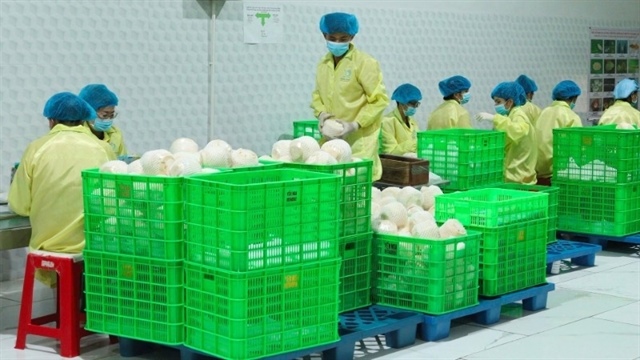
Workers package coconuts for export at an enterprise in Vĩnh Long province. — Photo nhandan.vn |
The European Union (EU) has announced it will increase food safety and sanitary and phytosanitary (SPS) inspections on imports from non-EU countries by 50 per cent, while raising the number of audits at member states’ border control posts by 33 per cent.
The move places stronger demands on Vietnamese exporters to ensure product quality and strict compliance if they wish to maintain stable market access.
According to Trần Ngọc Quân, Trade Counsellor at the Việt Nam Trade Office in Belgium and the EU, Việt Nam is currently the EU’s 17th largest trading partner. The country’s share of total EU imports has risen steadily, from 1.8 per cent in 2023 to 2.28 per cent last year, with a large proportion contributed by agricultural, forestry and aquatic products.
Entering its fifth year of implementation, the EU–Việt Nam Free Trade Agreement (EVFTA) continues to reduce tariffs to 0 per cent on many Vietnamese goods, enhancing price competitiveness.
In the first 11 months of this year, Việt Nam’s coffee exports to almost all EU markets recorded strong growth, backed by ample supply.
Exports to Germany exceeded US$1 billion, up 97.5 per cent, while shipments to Italy reached $615.8 million, up 52.9 per cent. The EU also remains Việt Nam’s fourth largest aquatic product export market.
However, the EU is now tightening requirements to ensure that imported products comply with the same strict food safety, environmental and animal welfare standards applied within the bloc. Alongside increased SPS checks, the EU is revising monitoring rules for pesticide residue, particularly for substances banned in Europe but potentially present in imported agricultural products. Substances recently reclassified by international organisations may also be incorporated into new EU law.
EU authorities are also intensifying efforts to combat trade fraud, so Việt Nam must manage trade flows with both the EU and third countries more rigorously to prevent origin fraud that could undermine EVFTA benefits, according to Quân. He suggested Việt Nam and the EU continue discussing trade-facilitation measures such as self-certification of origin, adding ST rice to tariff-rate quotas, and allowing exports of processed meat products to the bloc.
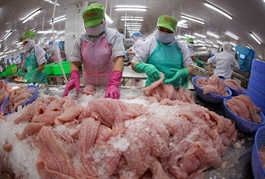
As one of Việt Nam’s leading aquatic product exporters to the EU, Sao Ta Foods JSC (Fimex VN) invests heavily in global certifications for responsible aquaculture to meet strict hygiene and quality standards.
Its Chairman Hồ Quốc Lực said the company was strengthening processed shrimp exports to the EU, focusing on high-value, deeply-processed products such as Nobashi shrimp and breaded and fried shrimp to enhance value and reduce competition pressures. With the EU increasingly prioritising traceability and sustainability, the company plans to expand its ASC-certified farming areas to secure stable raw material sources.
Vegetables and fruits are also under tighter scrutiny amidst ongoing EU warnings on certain Vietnamese products. To avoid rejection or destruction at EU borders, exporters must ensure compliance from cultivation to processing, strictly meeting SPS requirements.
Although the EU has adjusted some green transition policies, including delaying enforcement of the EU Deforestation Regulation (EUDR) to allow more preparation, Vietnamese enterprises are advised to stay updated, prepare early and proactively adapt.
At the same time, businesses are encouraged to rethink their market strategies, not only relying on import partners but also establishing a commercial presence in the EU to better connect with customers, manage logistics and ensure flexible, stable supply flows.
- 11:13 30/12/2025