Global investors’ take on how to make HCM City a regional innovation hub
Global investors’ take on how to make HCM City a regional innovation hub
Executives from major global firms agree that HCM City has the potential to become both an innovation hub and a true megacity.

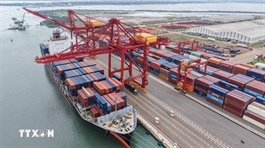
A view of HCM City, which has various advantages and potential to become a regional innovation hub and true megacity. — VNA/VNS Photo |
Executives from major global firms agree that HCM City has the potential to become both an innovation hub and a true megacity.
Speaking at the Autumn Economic Forum held in HCM City last week, they also suggested a number of initiatives for it to achieve that.
Jesse Choi, regional director for ASEAN at Sunwah Group and CEO of Sunwah Innovations, said: “HCM City has the potential to become a regional innovation hub.”
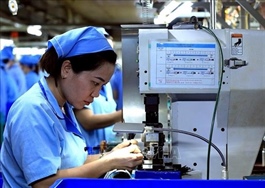
However, high-tech manufacturing and smart equipment and electric vehicle production face a shortage of skilled technical workers capable of operating modern production lines, he said.
Sunwah collaborates with leading vocational institutions to implement the “Enterprise – School – Research Institute” dual-training model in Jiangsu, Guangxi and Shanghai in China, where students combine theoretical learning with on-site factory training and are job-ready upon graduation.
He proposed establishing international vocational training centres in HCM City and key southern industrial zones that would deliver training aligned with global industry standards in semiconductors, automation, robotics, and EV manufacturing; deploy modern training equipment and expert instructors and connect students directly with employment opportunities in partner enterprises from Việt Nam and China.
“This model can significantly reduce skill gaps, support local industries and strengthen Việt Nam’s talent pipeline for high-tech growth.”
Supporting a high-tech ecosystem requires robust digital infrastructure, and Sunwah is working with international partners to develop energy-efficient, renewable-powered hyperscale data centres in HCM City and seeks stable power allocation, clear incentives and streamlined approval processes for this, he said.
For green urban mobility, he suggested government-designated shared e-bike parking zones and creating a fast-track approval channel for new e-bike models that meet safety and environmental standards.
“These three initiatives – high-tech training, digital infrastructure and green mobility – are complementary parts of the same objective: that of supporting HCM City’s transformation into an international centre of technology, innovation and sustainable urban development.”
Next-generation industrial township, park upgrades
Lee Ark Boon, CEO of Singapore’s Sembcorp Development and Co-Chairman of VSIP Group, proposed a two-track partnership to support the city’s ambition to become a regional innovation and financial hub.
The first should focus on co-developing a next-generation township for high-value industries that would feature renewable-powered data-centre campuses, semiconductor and precision-manufacturing zones, low-carbon industrial infrastructure aligned with Việt Nam’s net zero 2050 goals, R&D and innovation centres, and integrated lifestyle amenities to attract global talent, he said.
“We are already seeing strong interest from global players, including leading Taiwanese semiconductor firms, who are actively exploring expansion into Việt Nam.”

A view of HCM City, which has various advantages and potential to become a regional innovation hub and true megacity. — VNA/VNS Photo |
The second track should upgrade mature industrial parks into innovation ecosystems by creating high-tech zones within existing parks, deploying advanced energy and water systems and establishing sandboxes to pilot new technologies and business models, he said.
Sembcorp could do all this with streamlined investment approvals, clear renewable-energy frameworks and strategic land allocation with resettlement support, he said.
It wants consistent power-purchase agreements and licensing mechanisms that would allow industrial parks to procure green energy, including via direct power purchase agreements, and distribute it to tenants, reflecting rising demand from global firms in data, AI and advanced manufacturing, he said.
“With the right support and coordination, HCM City can lead the next chapter of digital, green and inclusive growth.”
David Lewis, CEO of Energy Capital Vietnam, said with its expected economic growth of 7–8 per cent a year, the new HCM City megacity could become a leading logistics hub in Southeast Asia, comparable to Singapore or Shanghai.
Achieving this requires investment in modern seaport facilities for larger vessels, industrial infrastructure to process strategic resources and service infrastructure to support logistics and tourism, he said.
Phạm Thái Lai, CEO of Siemens ASEAN and Việt Nam, said the city’s aspirations to become a leading international metropolis aligns closely with Siemens’ mission.
He emphasised the potential for collaboration in deploying high-tech solutions for digital transformation, resilience and sustainable growth.
The business leaders also expressed a desire to strengthen collaboration with the country and with HCM City to help realise the latter’s aspirations to become a leading international metropolis.
HCM City Party Secretary Trần Lưu Quang said the city “is entering a new phase of development with a broad vision and great ambition: to become a modern, dynamic liveable metropolis with global competitiveness.”
He said becoming an international metropolis depends not only on population or economic size but also the quality of growth, connectivity, innovation, governance efficiency, and the living environment.
The city is restructuring its development to become a multi-polar, multi-centred model built on growth-driving zones and economic corridors and grounded in five strategic pillars: high-tech industry and innovation, logistics and free trade, an international financial centre, tourism and culture, and international-standard education, healthcare and science-technology.”
But there are major challenges like governance pressures, a shortage of resources, infrastructure, high-quality human capital, and logistics and transportation systems in need of major upgrades, he said.
“The city government values every proposed initiative and is committed to taking them seriously to improve the investment environment, enhance governance capacity and support businesses.”
- 14:19 24/12/2025