European expertise to boost Vietnam’s sustainable logistics push
European expertise to boost Vietnam’s sustainable logistics push
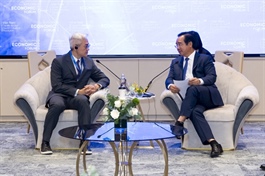
As Vietnam expands its role in global manufacturing and trade, the demand for smart, low-carbon logistics is becoming increasingly urgent to support its net-zero goals. Dan Jian, principal of Investment for the Asia and Middle East Region at APM Terminals under the Maersk Group, spoke with VIR’s Bich Thuy about how European expertise can help accelerate the sustainable logistics transition.
What makes Vietnam an attractive destination for European investment in sustainable port development?
Vietnam is rapidly modernising its infrastructure, positioning itself as a strategic logistics hub in Southeast Asia. The country’s investment in deepwater ports, expressways, and intermodal connectivity reflects a clear ambition to become a gateway for regional trade. Projects like the Lien Chieu Port in Danang and the expansion of Lach Huyen terminals in Haiphong and Cai Mep terminals in Ho Chi Minh are designed to handle ultra-large vessels and integrate with global shipping routes.

Photo: EuroCham |
For European investors, Vietnam offers a compelling mix of strategic location, political stability, and a young, hard-working and tech-savvy workforce. The government’s commitment to green port development and its alignment with international standards related to environmental, social, and governance (ESG) principals make it an attractive destination for sustainable investment. Vietnam’s EU-Vietnam Free Trade Agreement further enhances its appeal by reducing trade barriers and promoting regulatory alignment.
How can sustainable port operations drive economic growth while helping Vietnam meet its net-zero goals?
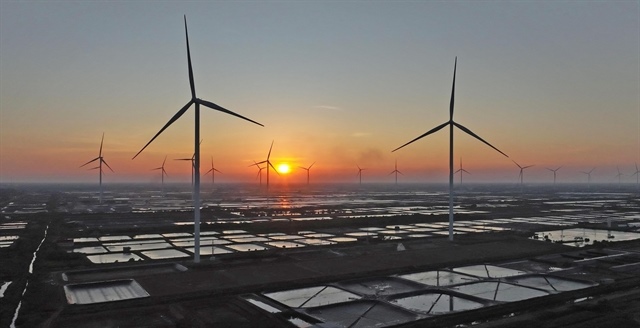
Ports are the backbone of Vietnam’s export-driven economy, contributing significantly to GDP and employment. Sustainable port operations – such as electrified cargo handling, shore power systems, and smart traffic management – enhance efficiency while reducing environmental impact.
By adopting green port models, Vietnam can increase throughput capacity, reduce operational costs, and attract high-value international cargo. Such improvements support economic growth while aligning with Vietnam’s net-zero commitment. The shift towards sustainability also opens doors to climate finance, green bonds, and technology transfer from European partners such as Maersk.
Photo: EuroCham |
What practical steps can Vietnamese businesses take to make their supply chains more sustainable and ethical?
Vietnamese businesses, regardless of size, can make their supply chains greener by investing in green energy generation, such as installing solar panels on buildings and plants where possible, and improving energy efficiency through upgrades to LED lighting and the use of electric vehicles in warehouses and fleets.
They can also engage suppliers by encouraging upstream partners to adopt ESG standards, supported by training or incentives, while advancing circular logistics by reducing packaging waste and promoting reuse whenever feasible.
Ethical supply chains also require transparency, fair labour practices, and community engagement. European buyers such as Ikea and Zara increasingly demand ESG compliance, making sustainability not just a moral imperative but a competitive advantage.
How can European best practices in green logistics be effectively implemented in Vietnam?
APM Terminals, as part of Maersk, has pioneered green transformation globally in our portfolio of over 60 ports – through electrified equipment, data-driven operations, and carbon-neutral targets. In Vietnam, these practices are being adapted through a series of targeted initiatives.
First, pilot projects are introducing electric cranes and automated gate systems at key terminals, such as the Hateco Haiphong International Container Terminal strategic partnership.
Second, local partnerships allow close collaboration with Vietnamese authorities and suppliers to tailor solutions to local conditions.
Finally, dedicated training initiatives are helping upskill Vietnamese port workers in green operations and digital tools. Measurable progress includes reduced fuel consumption, shorter vessel turnaround times, shorter truck turnaround times and lower carbon intensity per container. These results demonstrate that global standards can be localised effectively, with strong operator commitment and local stakeholder engagement.
How are logistics companies using digitalisation to drive both efficiency and environmental sustainability?
Digitalisation is a powerful enabler of sustainability, especially for resource-constrained logistics firms.
AI and predictive analytics can optimise routes, reduce idle time, and forecast demand more accurately. Automation allows robots to plan operations with optimal energy consumption, and the extensive use of sensors enables automated facilities to save on lighting costs due to the much-reduced need for human eye recognition in operations.
Digital twins support the simulation of port operations to test energy-saving scenarios before implementation. Meanwhile, cloud-based platforms enhance collaboration across supply chains and reduce paper-based processes. By combining digital and green strategies, companies can cut costs, improve resilience, and meet ESG targets. Government incentives for digital adoption – such as tax breaks and training subsidies – can further accelerate this twin transition.
|
APM Terminals’ fully automated and zero-carbon terminal in the Netherlands. Photo: EuroCham |
What impact will upcoming regulations and green standards have on the operations of logistics businesses?
Sustainability is becoming a regulatory and market access requirement, instead of a voluntary choice. In Vietnam and globally, upcoming standards are set to reshape the logistics and export landscape. Carbon reporting mandates will require the disclosure of Scope 1, 2, and eventually Scope 3 emissions.
ESG compliance for exporters, particularly alignment with EU regulations such as the Carbon Border Adjustment Mechanism, will help strengthen brand reputation and improve access to global markets. Additionally, green port certifications will benchmark environmental performance and unlock opportunities for green finance. These regulations will reshape logistics operations – from procurement to delivery.
Stronger public–private partnerships are essential to navigate this shift. Government can provide policy clarity, infrastructure funding, and regulatory alignment, while foreign investors bring capital, technology, and global networks. Local enterprises contribute market knowledge and execution capability. Together, they can build a resilient, green logistics ecosystem. At APM terminals, we have seen two proven examples in our Cai Mep and Haiphong partnerships in the last two decades.
How does APM Terminals see its role in advancing sustainable logistics in Vietnam, and what opportunities do platforms like Green Economy Forum (GEF) 2025 offer to support this vision?
At GEF 2025, APM Terminals aims to convey a clear message: green logistics is not just possible – it is profitable, scalable, and urgent. We will showcase our commitment below for our existing businesses and future initiatives in Vietnam by investing in sustainable infrastructure, such as low-emission terminals and smart port technologies; fostering inclusive growth by creating jobs, empowering local communities, and supporting small- and medium-sized enterprises; and driving collaborative innovation by partnering with Vietnamese stakeholders to co-develop solutions.
GEF is a vital platform to bridge European investors and Vietnamese policymakers. It fosters dialogue, trust, and actionable partnerships. By aligning on shared goals – economic growth, environmental stewardship, and regional connectivity – we can turn ambition into impact.
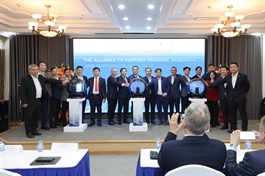
GEF 2025, co-hosted by EuroCham and VIETRADE under the Ministry of Industry and Trade, took place on November 27 in Hanoi. The event featured one high-level plenary session, nine thematic conferences, three technical workshops, and one exclusive networking evening, fostering constructive dialogues between policymakers, business leaders, and innovators to advance Vietnam’s green transition across sectors.
- 10:00 29/11/2025