Việt Nam sees new push to attract green FDI
Việt Nam sees new push to attract green FDI
After nearly four decades of economic integration, the foreign-invested sector has become an important pillar of Việt Nam’s economy.
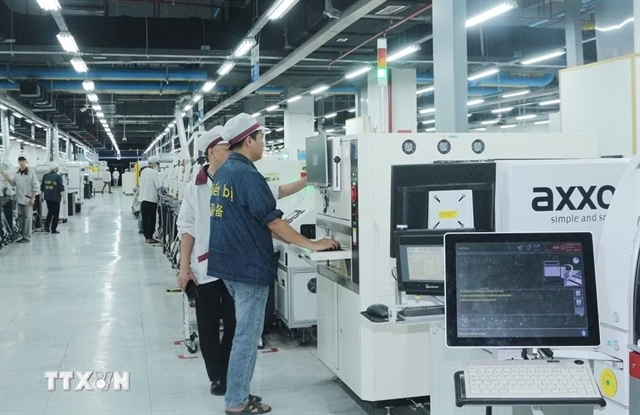
Sankoh Vietnam Co Ltd is a wholly Japanese-owned enterprise operating in Bờ Trái Sông Đà Industrial Park in Hòa Bình Province. — VNA/VNS Photo |
As Việt Nam enters a new phase of faster growth, its strategy for foreign direct investment (FDI) is changing too – from competing for investment based on location to building industry clusters, value chains and innovation ecosystems needed to attract projects that bring advanced technology, higher value and stronger links with the domestic economy.
This shift is at the heart of a resolution issued by the Communist Party of Việt Nam (CPV) in June 2026, known as Resolution 10, which sets out a new direction for the development of the foreign-invested economic sector.
The new approach comes as global investment flows increasingly favour green production, advanced technologies and sustainable business models.
For Việt Nam, this creates an opportunity not simply to attract more FDI, but to attract higher-quality projects that can generate higher added value, facilitate technology transfer, strengthen domestic supply chains and create new drivers of growth.
After nearly four decades of economic opening and integration, the foreign-invested sector has become an important pillar of Việt Nam’s economy. During 2021–25 alone, total registered FDI reached US$184.2 billion, up 8.4 per cent from the previous five-year period.
Investment attraction maintained its momentum in the first year of the country’s new development phase.
Total registered FDI reached $38.06 billion in the first seven months of this year, up 58 per cent year on year. Disbursed FDI hit $15 billion, the highest level for the seven-month period in five years, up 11.8 per cent year on year.
These results show that Việt Nam continues to appeal to international investors. However, as the country sets its sights on double-digit growth and aims to enter a period of faster development, higher expectations are being placed on the FDI sector.
Quality over quantity
Nguyễn Hoa Cương, deputy director of the Institute for Policy and Strategy Studies under the CPV Central Commission for Policy and Strategy, said that Việt Nam’s economic growth targets for 2026–30 should be built on innovation, digital transformation, green transformation and improvements in workforce quality.
The business community needs to innovate its production models, enhance competitiveness and adopt sustainable business practices, according to Cương. As domestic enterprises strengthen their technological and managerial capabilities and production standards, they will be better positioned to forge links with the FDI sector, increasing the spillover effects of foreign investment across the economy.
Alongside changes within businesses, industrial park models are also shifting toward greener and smarter development. This is key to meeting the needs of a new generation of investors.
|
Sankoh Vietnam Co Ltd is a wholly Japanese-owned enterprise operating in Bờ Trái Sông Đà Industrial Park in Hòa Bình Province. — VNA/VNS Photo |
The requirement to improve the quality of FDI is set out more clearly in Resolution 10. The resolution places particular emphasis on attracting FDI into the green and digital economies, while promoting technology transfer and strengthening spillovers and links with the domestic economy.
One of the resolution’s key innovations is to link investment incentives to the fulfilment of commitments made by FDI enterprises in areas including technology, research and development, technology transfer, training for Vietnamese workers, the share of domestic added value, development of domestic suppliers and green and digital transformation.
Nguyễn Quang Vinh, vice chairman of the Vietnam Chamber of Commerce and Industry and chairman of the Vietnam Business Council for Sustainable Development, said the resolution represented a notable shift in Việt Nam's approach to developing the foreign-invested economic sector.
The focus is shifting from a location-based approach to investment attraction towards industry clusters, value chains and innovation ecosystems. At the same time, greater emphasis is being placed on investment quality and efficiency, technology transfer, participation in supply chains and domestic added value, rather than simply on investment volume.
Vinh cited the OECD’s FDI Qualities Review of Việt Nam: Powering the Next Growth Phase report released in June, noting that Việt Nam’s next phase of growth would depend less on the quantity of investment and more on its quality, particularly projects that boost productivity, facilitate knowledge transfer, support Vietnamese enterprises and benefit workers.
This would also provide considerable scope for Việt Nam to channel FDI into priority sectors such as high technology, clean energy, the circular economy, energy-efficient manufacturing, digital infrastructure and industries capable of generating high added value.
Building the ecosystem
Resolution 10 also encourages credit institutions to provide interest rate support and preferential credit for green and circular FDI projects, energy-efficient projects, projects that use resources sustainably and those that apply environmental, social and governance standards. This provides a basis for expanding access to green finance, one of the key conditions for businesses undergoing the green transition.
However, turning this opportunity into actual investment flows will require Việt Nam to continue building a comprehensive ecosystem to support green investment.
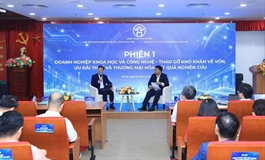
According to information presented at a forum on developing eco-industrial and smart industrial parks, Việt Nam currently has 425 industrial parks, of which 299 are operational, covering more than 92,000 hectares. Yet only around 1–2 per cent are currently transitioning to the eco-industrial park model.
High initial investment costs, limited access to green finance, inadequate linkages and resource sharing among businesses, slow technological transformation and shortages of professionals specialising in sustainable development remain key bottlenecks that need to be addressed.
To attract more green FDI and improve institutions and investment procedures, localities therefore need to accelerate the development of green industrial park infrastructure, energy systems, logistics and digital infrastructure, while preparing a workforce suited to emerging technology industries.
At the same time, developing a network of Vietnamese enterprises capable of becoming suppliers to the FDI sector should be regarded as a key priority.
The strong foundation built over nearly four decades of investment attraction, together with the new direction set out in Resolution 10, gives Việt Nam an opportunity to move beyond competing for investment based on volume and build a stronger FDI ecosystem centred on green and high-tech projects, deeper domestic linkages and greater value creation.
- 07:59 03/10/2026