Food packaging innovation must balance safety and circular economy
Food packaging innovation must balance safety and circular economy
Packaging not only contains, preserves and transports food but also plays a direct role in controlling food safety risks, reducing environmental impacts and promoting a circular economy.
 |
Food packaging innovation must balance food safety with environmental sustainability, as regulators and businesses seek to control risks from food-contact materials while promoting resource efficiency and a circular economy.
The issue was discussed at a seminar in Hà Nội on Wednesday, organised by the Vietnam Association of Food Science and Technology (VINAFOSA), the National Institute for Food Control (NIFC), Tetra Pak Vietnam and TH Group, to mark VINAFOSA’s 25th anniversary.
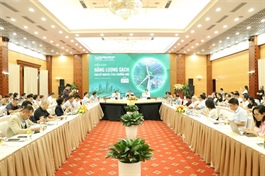
The event attracted nearly 250 participants from central and local government agencies, research institutes, universities, associations, businesses and the media to discuss regulatory requirements, technological solutions and practical approaches to safer, more sustainable food packaging.
“Food safety is particularly important to public health, quality of life, business development and the competitiveness of the economy,” VINAFOSA chairman Lê Văn Giang said.
“As the food industry faces increasingly stringent requirements for safety, quality, technological innovation, environmental protection and sustainable development, new-generation packaging and food technologies are becoming increasingly important,” he said.
Packaging not only contains, preserves and transports food but also plays a direct role in controlling food safety risks, reducing environmental impacts and promoting a circular economy, he added.
Bùi Đức Lập, deputy director of the Ministry of Health’s Vietnam Food Administration, highlighted challenges arising from increasingly diverse supply chains, the growth of e-commerce and rapid changes in food processing technologies and materials that come into contact with food.
He said food safety management needed to place greater emphasis on risk assessment, post-market inspections, monitoring and early warnings. Strengthening testing capacity, verification and traceability, alongside digital transformation and data sharing among relevant agencies, would also help authorities identify and address risks more effectively.
The Vietnam Food Administration has reviewed all 66 national technical regulations, including four governing packaging, utensils and materials that come into direct contact with food, the seminar heard.
Discussions also covered proposed revisions to the Law on Food Safety, with a focus on improving risk control, clarifying responsibilities and facilitating regulatory compliance.
Safety risks associated with food-contact packaging can depend on the properties of materials and how they are used. The migration of substances from packaging into food may be affected by temperature, contact time and the compatibility of materials with particular food products.
Assessing packaging safety therefore requires scientific evidence, testing results and compliance with applicable technical regulations and standards.
Technology and the circular economy
|
|
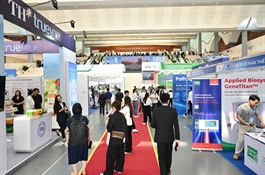
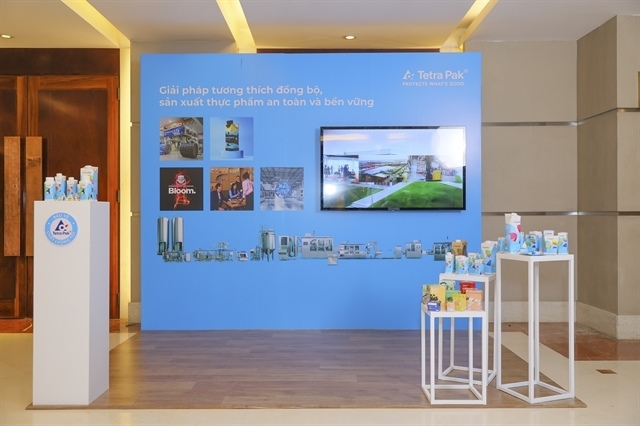
Tetra Pak showcases integrated processing and packaging solutions to help manufacturers minimise risks and meet increasingly stringent food safety and quality requirements.
Alongside safety requirements, the seminar examined packaging innovations that could improve resource efficiency and reduce environmental impacts.
As businesses pursue greener production, packaging materials and designs must minimise material use without compromising food preservation, while remaining compatible with production lines and practical collection and recycling systems.
Nguyễn Thanh Giang, managing director of Tetra Pak Vietnam, said food safety and quality should be addressed throughout the production process rather than at individual stages.
“At the seminar, we had the opportunity to introduce integrated solutions spanning processing and packaging to help manufacturers reduce risks and meet increasingly stringent requirements for safety and quality. We hope the seminar will encourage practical discussions and help stakeholders find solutions suited to production realities and the development of the industry,” she added.
The approach highlights the role of integrated technologies in helping manufacturers manage risks and maintain product quality. However, the transition to greener packaging must also be supported by assessments of material safety, technological suitability and the feasibility of collection and recycling.
Representatives of TH Group shared examples of packaging improvements, including material optimisation, weight reduction and design changes aimed at saving resources, reducing plastic use and limiting environmental impacts.
These measures have helped the group cut plastic use by around 600 tonnes a year and save tens of billions of Vietnamese đồng in production costs.
Through the Packaging Recycling Organization Vietnam (PRO Vietnam), more than 21,000 tonnes of milk cartons have been collected since 2024, according to the company. TH is one of the alliance’s founding members.
The figures illustrate the potential for packaging improvements to deliver both economic and environmental benefits. Expanding such initiatives requires closer coordination among manufacturers, collection and recycling operators, and regulators to ensure that safety and product quality remain priorities.
A panel discussion titled “Completing the Ecosystem for Safe and Sustainable Food Production in Việt Nam” brought together representatives from regulators, scientific organisations and businesses to exchange experience and discuss practical challenges.
Topics included legal requirements for food-contact packaging and materials, the identification of safety risks, technologies to mitigate those risks, sustainable packaging and ways to prevent legal risks related to food safety.
The discussions aimed to identify practical solutions to support innovation, responsible production and the development of a circular economy in Việt Nam’s food industry.
Established in 2001, VINAFOSA is a professional and social organisation bringing together scientists, experts and practitioners in food safety and related fields. Over the past 25 years, it has worked to disseminate knowledge, provide policy consultation and connect researchers, regulators and businesses to promote food safety and protect public health.
The anniversary seminar also provided an opportunity to review the association’s work and strengthen cooperation among stakeholders as the food industry responds to evolving regulatory requirements, technological advances and sustainability goals.
- 21:54 28/10/2026