EFTA–Vietnam Free Trade Agreement opens up opportunities to enhance supply chain
EFTA–Vietnam Free Trade Agreement opens up opportunities to enhance supply chain
The EFTA–Vietnam Free Trade Agreement will open up opportunities for Vietnamese products, especially those with supply chains meeting increasingly stringent quality and sustainability requirements in new markets.
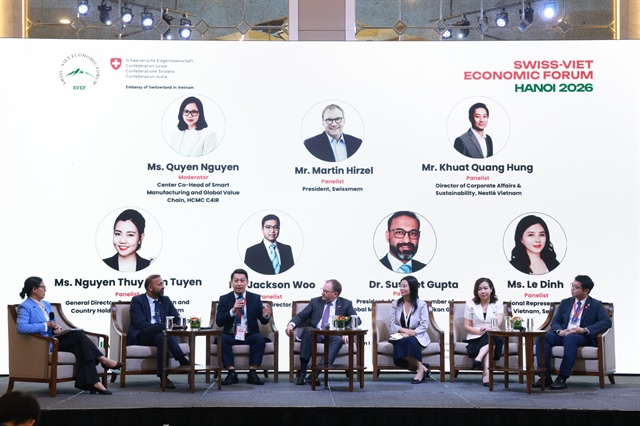
Photo courtesy of Nestlé |
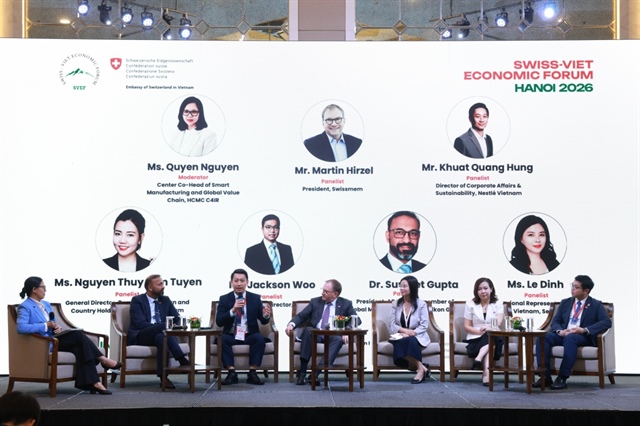
At the Swiss-Vietmam Economic Forum 2026 in Hanoi, Nestlé shared its experience in building and strengthening the resilience of supply chains in Vietnam.
The forum took place as Vietnam and Switzerland marked 55 years of diplomatic relations and concluded EFTA–Vietnam free trade negotiations. The EFTA comprises Switzerland, Norway, Iceland, and Liechtenstein. The EFTA and Vietnam has bilateral trade between Vietnam reaching €4.8 billion in 2025. In addition to commitments on industrial goods, the agreement also covers sustainable development, small and medium-sized enterprises, cooperation, and capacity building.
At a panel discussion on industrial transformation and supply chains, Khuat Quang Hung, deputy general director of Nestlé Vietnam, shared his perspective on building a strong, competitive, and resilient supply chain. Citing the example of a sustainable coffee value chain, Hung said that a competitive and resilient coffee supply chain must start with farmers.
“Farmers play a vital role in a strong and resilient coffee supply chain. Against the backdrop of climate change, farmers face growing pressure from issues related to soil quality, water resources, as well as increasingly stringent requirements for traceability and emissions reduction. Farmers need access to new knowledge, technologies, and appropriate farming practices to protect resources, maintain productivity, and secure long-term livelihoods,” Hung said.
“To achieve sustainable development, it is important to bring economic efficiency and a better life for farmers. Therefore, businesses should shift from a conventional purchasing relationship to a long-term cooperation with farmers to increase yields and reduce costs. By applying sustainable farming practices, it will help farmers to increase productivity, improve income, and reduce environmental impacts. In addition, it will spur the development of small- and medium-sized enterprises in the supply chain,” he added.
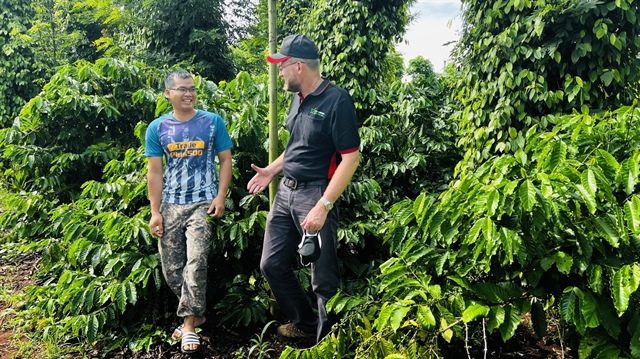
Photo courtesy of Nestlé |
Since 2011, the Nescafé Plan has supported more than 23,000 farming households and provided more than 492,000 training sessions on sustainable coffee production under the 4C standard. The programme supports high-yield coffee varieties that are more resistant to drought and pests, promotes water-saving irrigation, reduces the use of chemical fertilisers, and facilitates the transition to regenerative agriculture. These efforts have helped farmers reduce costs, improve incomes, and better meet export requirements.
According to Nestlé Vietnam, a sustainable value chain should be built on three foundations, including trust to facilitate joint investment and collaborative problem-solving; capability to meet increasingly rigorous standards, particularly in demanding markets; and a long-term commitment to foster enduring partnerships, develop capacity, and provide ongoing support to local suppliers.
“This represents a promising area for cooperation between Swiss and Vietnamese businesses. Swiss companies have strengths in technology, expertise, quality standards, and international experience. Vietnamese partners bring deep local knowledge, production capabilities, and an entrepreneurial spirit. Combining these strengths can help create more competitive and sustainable value chains in the future,” Hung said.
- 15:56 20/10/2026