VietinBank’s non-core divestment struggles highlight liquidity realities
VietinBank’s non-core divestment struggles highlight liquidity realities
The Hanoi Stock Exchange (HNX) recently published subscription results for the auction of VietinBank’s stake in PHP.
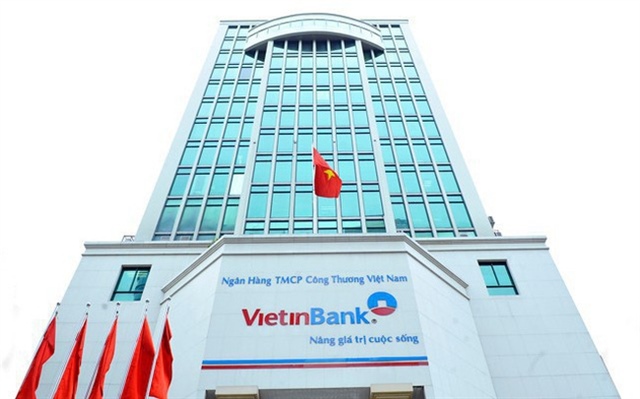
VietinBank’s headquarters in Hà Nội. — Photo VietinBank |
Despite its robust financial health, VietinBank has repeatedly encountered hurdles in divesting its non-core holdings in two premier port operators, Port of Hai Phong Joint Stock Company (PHP) and Saigon Port Joint Stock Company (Saigon Port), showing that assets cannot always be quickly converted into cash.
The Hanoi Stock Exchange (HNX) recently published subscription results for the auction of VietinBank’s stake in PHP.
VietinBank auctioned over 6.9 million PHP shares on September 16, representing 2.1 per cent of the port’s charter capital. During the registration window from August 27 to September 9, the offering attracted 15 investors, comprising three domestic institutions and 12 individuals.
Total registered bids reached over 2.2 million shares, with institutional investors accounting for 1.2 million units and individual investors snapping up more than one million units.
Subscription rates reached roughly 32 per cent of the offered volume, leaving over 4.7 million shares unsold. This low subscription rate demonstrates that even companies experiencing strong earnings growth cannot always guarantee a fully subscribed share offering.
According to its financial statements for the first half of this year, PHP posted nearly VNĐ1.7 trillion (US$65.4 million) in net revenue, representing a 37.1 per cent year-on-year increase, while net profit more than doubled to VNĐ836 billion.
The core issue extends beyond corporate fundamentals, pointing instead to market absorption capacity, seller price expectations and shifting investor demand.
If the PHP auction showed underwhelming participation, Saigon Port presented an even steeper challenge, with multiple divestment attempts hampered by insufficient liquidity.
VietinBank repeatedly listed its entire stake in Saigon Port for auction between January and August this year, only to cancel the plans due to a complete lack of registered bidders. Subsequent attempts to trade shares on the secondary exchange yielded no notable results.
The lender made another push in August this year, offering 19.3 million shares in Saigon Port, equivalent to an 8.93 per cent ownership stake, slated for trading between August 17 and September 15.
Yet Saigon Port’s business performance remained solid. In the first half of this year, the company generated over VNĐ579 billion in revenue, up 8 per cent year-on-year, while net profit climbed 35 per cent to VNĐ293 billion. This divergence highlights a vital market truth: that stellar business performance and share liquidity are two entirely distinct metrics.
A company may boast soaring profits, valuable assets and promising prospects, but a major shareholder can still struggle to offload a large block of shares within a tight time frame.
Strong earnings do not equal easy exits
The primary takeaway from both transactions is the stark gap between enterprise value and investment liquidity. Both PHP and Saigon Port delivered profit growth in the first half of the year, yet neither generated sufficient market demand to absorb the massive number of shares put on the block by a major stakeholder.
For commercial banks, financial strategy extends far beyond identifying profitable ventures. A crucial component is the exit strategy, specifically how efficiently and at what price an investment can be converted back into cash when required.
From this perspective, VietinBank’s persistent divestment efforts reflect an ongoing plan to restructure its asset portfolio and liquidate non-core investments.
However, the struggles at PHP and especially Saigon Port show a humbling market reality, proving that successful divestments depend less on what sellers want and much more on what the market can actually absorb. Ultimately, liquidity can be a more reliable measure than asking prices when judging the true success of a sell-off.
- 08:36 29/09/2026