The country’s next investment cycle
The country’s next investment cycle
Vietnam is entering a bolder phase of economic development, with Standard Chartered believing that the country is entering a new era of investment potential.
While economic expansion remains robust, Vietnam’s focus is increasingly shifting towards higher-quality, productivity-led growth driven by higher-value industries, innovation, infrastructure development, and deeper integration into regional and global markets, according to Standard Chartered Vietnam.
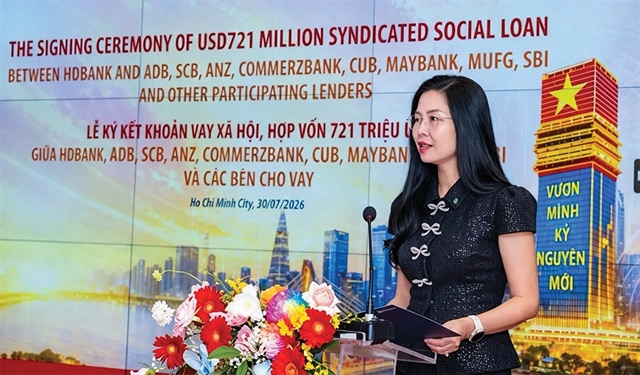
Nguyen Thuy Hanh, CEO and head of Coverage at Standard Chartered Vietnam, at a signing ceremony for a $721 million international syndicated social loan, photo Standard Chartered Vietnam |
At the same time, resilient domestic consumption, supported by a growing middle class and expanding retail sector, is emerging as a key driver alongside exports and investment.
Despite ongoing global uncertainties, Vietnam’s economy continues to demonstrate resilience, with GDP growth accelerating to 8.4 per cent on-year in the second quarter. Beyond strong manufacturing performance, growth is also supported by domestic consumption, investment inflows and ongoing economic transformation efforts.
While inflationary pressures and global uncertainties remain challenges to monitor, the latest data highlights the strength of Vietnam’s economic fundamentals and its ability to navigate a more complex external environment.
The continued expansion of Vietnam’s retail sector is also reinforcing the country’s growth outlook. Rising household incomes, changing consumer preferences and accelerating digital adoption are creating new opportunities across consumer goods, services, payments and financial solutions.
As financial needs become more sophisticated, demand for savings, investment and wealth management solutions is expected to grow alongside broader economic development. According to the OECD’s FDI Qualities Review 2026, companies are prioritising diversification, resilience and operational agility, creating new opportunities for Vietnam to move further up the value chain and attract higher-quality investment.
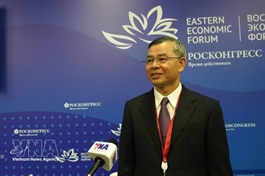
“Vietnam is entering a new era of growth characterised by stronger domestic demand, increasing investment in infrastructure and technology, and a growing focus on higher-value economic activities” said Nguyen Thuy Hanh, CEO and head of Coverage, Corporate and Investment Banking for Standard Chartered Vietnam. “These trends are creating new opportunities for businesses and investors while reinforcing Vietnam’s position as one of the region’s most dynamic growth markets.”
Vietnam’s long-term development ambitions are reshaping the investment landscape. Alongside efforts to strengthen key economic centres and modernise infrastructure, the country is placing greater emphasis on innovation, productivity, digital transformation, demonstrated by initiatives such as Ho Chi Minh City’s venture capital fund launched in late April and the development of a more sophisticated private sector.
At the same time, global investors continue to monitor Vietnam’s ongoing market reforms and capital market development. Continued progress in these areas is expected to further enhance market accessibility and support Vietnam’s attractiveness as a long-term investment destination.
Standard Chartered Vietnam believes that investors will focus on the country’s ability to strengthen productivity, accelerate digital transformation and support innovation-led growth. As businesses continue to invest in technology and operational resilience, these factors are expected to play an important role in sustaining long-term competitiveness.
“Vietnam’s opportunity today extends beyond its traditional strengths,” Hanh noted. “The next era of growth will be driven by innovation, connectivity, productivity improvements and the ability to attract high-quality investment that supports long-term economic transformation.”
Access to efficiency
As Vietnam pursues its long-term development ambitions, financing will play a critical role in translating opportunity into economic value. Significant capital will be needed across infrastructure, energy, innovation and supply chain development.
At the same time, the focus is shifting from the availability of capital to its effective deployment, with greater emphasis on productivity gains, operational resilience and sustainable returns.
For businesses, this means navigating a more complex operating environment with access to solutions that support international expansion, strengthen resilience, improve liquidity management and enable companies to respond more effectively to changing market conditions.
“Future competitiveness will depend not only on access to capital, but also on how effectively businesses leverage technology, manage risk and optimise liquidity across their operations. As companies pursue international expansion, they are seeking trusted partners that can help them access new markets, navigate complexity and accelerate long-term growth,” said Hanh.
This is particularly relevant as Vietnamese businesses continue expanding into international markets while global companies seek to strengthen their presence in Vietnam.
“Vietnam’s ability to attract and deploy capital effectively will depend on continued reforms and a supportive business environment. A transparent and predictable regulatory framework will be key to sustaining investor confidence and attracting long-term investment. At the same time, effective implementation of policies will be critical in enabling businesses and investors to turn opportunities into real economic value,” Hanh said.
The development of Vietnam’s International Financial Centre represents an opportunity to deepen the country’s connectivity with global capital flows, broaden funding channels and strengthen Vietnam’s position as an attractive destination for international investors.
“As investor expectations continue to evolve, transparency, governance and operational resilience are becoming integral to investment decisions, alongside traditional considerations,” she added.
Photo Standard Chartered Vietnam |
Mainstream business strategy
Another defining feature of Vietnam’s next investment cycle is the growing integration of sustainability into business and investment decisions.
“Rather than being viewed solely through the lens of large-scale green projects, sustainability is becoming embedded in broader corporate strategies, risk management frameworks and supply chain requirements,” said Hanh.
“Beyond environmental objectives, sustainability is closely linked to business resilience, governance standards, supply chain expectations and access to international markets. As global investors and trading partners raise expectations, sustainability is becoming an important component of long-term business resilience and value creation.”
Many businesses are now seeking ways to balance growth ambitions with evolving stakeholder expectations around environmental and social impact.
“We are seeing awareness among corporates that sustainability is becoming an important component of long-term competitiveness and resilience. Businesses are exploring how sustainability considerations can be integrated into their operations, financing strategies and growth plans in ways that support both commercial and long-term objectives,” said Hanh.
Standard Chartered Vietnam has responded to these evolving needs through a range of solutions across sustainable finance, transaction banking, trade and treasury services. This includes supporting landmark sustainable financing transactions, such as MB Bank’s $500 million syndicated green loan and HDBank’s $721 million international syndicated social loan, alongside other participating banks.
According to the Sustainable Finance Impact Report 2025, Standard Chartered Vietnam recorded a 23.4 per cent increase compared to 2024 in green and social assets which resulted in 177,635 tonnes of CO2 emissions avoided in the last year, and 445 loans for small- and medium-sized enterprises.
As Vietnam’s capital needs evolve, the role of financial institutions is also changing. Beyond providing financing, banks are expected to play a broader role in facilitating connections between markets, investors and businesses, while helping clients navigate complexity and capture growth opportunities.
“At Standard Chartered, we see ourselves as a long-term partner in Vietnam’s growth journey,” said Hanh. “Our focus is on supporting clients through capital mobilisation, trade facilitation, cross-border connectivity and innovative financial solutions that help them seize opportunities both within Vietnam and across global markets.”
Vietnam’s next era of growth will be determined by how effectively that investment is transformed into innovation, productivity and long-term economic value.
“Achieving this will require strong collaboration between the public and private sectors, investors and businesses, supported by an enabling policy environment,” Hanh explained. “By combining our international network with deep local expertise, we are committed to helping clients strengthen resilience, unlock opportunities and contribute to Vietnam’s long-term economic transformation.”
- 14:30 08/09/2026