HCM City: Green start-ups pave way for higher-value Vietnamese farm produce
HCM City: Green start-ups pave way for higher-value Vietnamese farm produce
The 12th Green Entrepreneurship Contest 2026, themed “The Path to Sustainable Development”, is highlighting a growing generation of young agricultural entrepreneurs seeking to add value to Vietnamese farm produce through green business models.
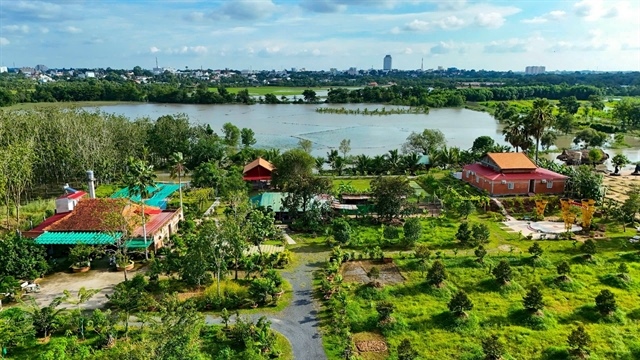
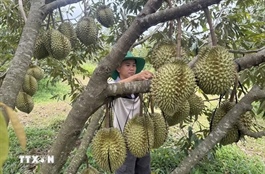
Green farm models combine agricultural production with tourism experiences, helping diversify local tourism products. — VNA/VNS Photo |
The 12th Green Entrepreneurship Contest 2026, themed “The Path to Sustainable Development”, is highlighting a growing generation of young agricultural entrepreneurs seeking to add value to Vietnamese farm produce through green business models.
Organised by the Business Studies and Assistance Centre (BSA), the Vietnam High-Quality Goods Association and partner organisations, the contest is taking place nationwide.
In HCM City and southern provinces and cities, many projects are moving beyond the use of local agricultural products by turning by-products into raw materials, applying technology to production, developing commercially viable products and creating livelihoods for local communities.
Circular economy
Nguyễn Thị Bảo Hồng from Đồng Nai City has brought to the contest a naturally grown straw mushroom project based on a circular model, in which spent straw is used to raise earthworms and produce organic fertiliser and biomass for vegetables, while plant residues are composted and returned to the soil.
Other projects apply the same principle to agriculture and climate adaptation. The “Seed Armour” project from Cần Thơ uses rice straw, coffee grounds, Trichoderma fungi and fermented organic glue to create seed coatings that protect seeds during storage and support plant growth. The Hòa Đê brackish-water tilapia fish cake project, meanwhile, processes tilapia into fish cakes and turns by-products into protein-rich liquid fertiliser for rice-shrimp farming communities.
Several initiatives combine circular production with social impact, including fashion and household products made from waste fabric and old coconut trunks, while creating livelihoods for disadvantaged groups. Others tackle waste-treatment challenges by converting biological waste into compost, recycled plastic pellets and microbial products, alongside bio-based materials such as insulation from lotus stems, leather from mango peels and household products from rice husks.
Trần Lan Anh, co-founder and strategic advisor at GreenHubAsia and a member of the judging panel, said young entrepreneurs were increasingly developing circular-economy projects that sought not only profits but also social impact.
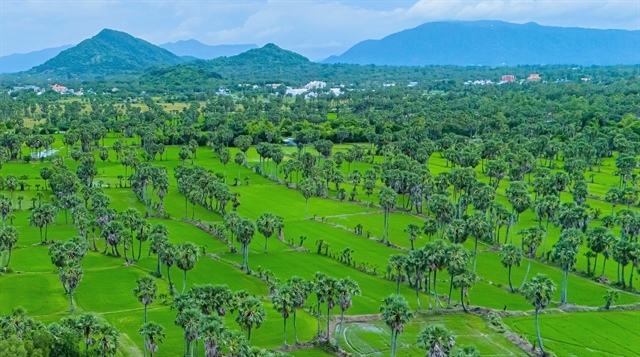
Green farm models combine agricultural production with tourism experiences, helping diversify local tourism products. — VNA/VNS Photo |
Technology adds value
Projects from other regions also show a shift from selling raw materials towards deeper processing and higher-value products.
The “Regenerative Agriculture – Elevating the Value of Vietnamese Rice” project from Đồng Tháp Province uses rice straw and cattle manure to make microbial organic fertiliser, which is returned to rice fields. The resulting rice is processed into ready-to-eat products, with Retort sterilisation technology considered to extend shelf life at room temperature.
The “Fresh Canned Palmyra Palm” project from An Giang Province develops a traditional Khmer product for urban consumers, food and beverage businesses and modern distribution channels. The VK Fermented Fish Paste Concentrate project uses cá linh from An Giang and cá phi from Cà Mau to create a concentrated product that shortens preparation time for traditional southern dishes, while the Ngọc Tiền Shrimp Cake project processes river shrimp into cakes, with heads and shells used for shrimp sauce and organic fertiliser.
Technology is also being applied to practical agricultural problems. One project uses artificial intelligence to identify signs of disease in durian trees from images, combining orchard data and farming records to provide recommendations. The application is available on Google Play and has recorded its first payment transactions, with pilot cooperation under way with agricultural-input distributors and cooperatives.
These projects also highlight a key challenge in commercialisation: a green product needs more than an environmental story. It must demonstrate quality, competitive pricing, consistency, standards, production capacity and market demand.
Supporting private sector
The development of these projects comes amid stronger policy attention to private-sector development.
The Political Bureau issued Resolution No. 68-NQ/TW on May 4, 2025, on private-sector development.
The resolution identifies the private sector as an important driver of the economy and includes measures to support businesses, innovation, technology application and green transformation.
Against this backdrop, the Green Entrepreneurship Contest provides a platform for young agricultural entrepreneurs while contributing to the development of private businesses and entrepreneurial activity.
Vũ Kim Anh, deputy director of BSA and in charge of the Green Entrepreneurship programme, said judging panels had highly valued projects from mountainous and coastal areas that made use of local resources and agricultural and fisheries by-products.
Several projects also incorporated environmental protection and opportunities for vulnerable groups, including children, people with disabilities and rural women.
She said the projects reflected a shift in entrepreneurial thinking, from finding a product to sell towards identifying a community problem and developing a viable business model to address it.
Entrepreneurs were increasingly starting with specific local problems, then developing business models to solve them and bringing by-products into new value chains.
However, she stressed that products still needed to demonstrate quality, standards, competitive pricing and stable production capacity to establish a position in the market.
In previous editions, a number of projects from the Green Entrepreneurship Contest have developed into businesses with established positions in the market, including enterprises recognised under the Vietnam High-Quality Goods programme and the Vietnam High-Quality Goods – Integration Standards programme.
- 15:16 29/09/2026