Green transition opens new doors for electronics suppliers
Green transition opens new doors for electronics suppliers
Vietnam's electronics suppliers are adapting to new global procurement standards, with environmental, social, and governance, carbon data, traceability, and smart manufacturing increasingly shaping access to higher-value supply chains.
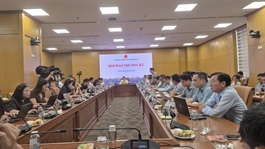
At a workshop on Vietnam's electronics sector in the green supply chain in Hanoi on September 16, Do Thi Thuy Huong, a representative of the Vietnam Electronic Industries Association, said deeper participation in global supply chains was creating opportunities for domestic companies while changing how international customers select suppliers.
“If Vietnamese businesses fail to make the green transition, they risk being excluded from global supply chains,” Huong said. “We must act to transform production models, from adopting energy-saving technologies to building transparent environmental, social, and governance (ESG) management systems to ensure long-term competitiveness and sustainability.”
Requirements from key export markets such as the EU, the United States, and Japan are becoming more stringent, while net-zero commitments by multinational corporations are gradually extending environmental requirements throughout their supply chains.
Quality, cost, and delivery issues remain fundamental considerations for international buyers. However, carbon emissions, material origins, chemical management, traceability and ESG data are increasingly being incorporated into supplier assessments.
Tran Nhat Anh, ESG project manager at SGS Vietnam, said environmental requirements from end markets were being transmitted through original equipment manufacturers (OEMs) and different supplier tiers before reaching individual factories.
"Quality, cost, and delivery remain essential, but suppliers are increasingly being asked to provide information on carbon emissions, material origins, and data transparency,” Anh said.
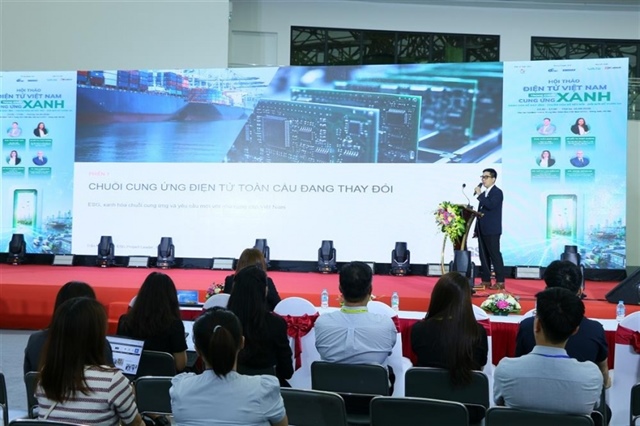
Tran Nhat Anh, ESG project manager at SGS Vietnam. Photo: SGS |
According to Anh, buyers are increasingly assessing suppliers across four broad areas. Companies first need to meet legal, chemical, labour, and safety requirements, while also developing greenhouse gas inventories, product carbon footprint data, renewable energy information and material traceability.
Suppliers are also expected to demonstrate measurable improvement through baselines, targets, corrective action plans, and implementation schedules, while maintaining consistent and traceable documentation that can be independently verified.
These requirements are changing the role of environmental data in electronics manufacturing. Information that was previously used mainly for internal management is increasingly forming part of commercial discussions with customers as OEMs translate their net-zero targets into supplier scorecards and procurement requirements.
Scope 3 emissions are an important part of this shift. Scope 1 covers direct emissions from sources owned or controlled by an organisation, while Scope 2 relates to purchased electricity and other forms of energy. Scope 3 covers 15 categories of indirect upstream and downstream emissions.
Figures presented at the workshop indicated that 70–90 per cent of a brand’s emissions footprint could be located within its value chain. This is increasing demand for emissions information from suppliers as international companies seek to measure the carbon footprint of their products and supply networks.
The growing importance of data is also bringing digitalisation and green manufacturing closer together.

David Bergman, vice president of international relations at global electronics association IPC, speaks at the workshop. Photo: SGS |
David Bergman, vice president of international relations at global electronics association IPC, provided an international perspective on smart-factory development in the electronics industry.
Bergman said smart-factory development was increasingly linked to companies’ ability to collect and manage production data. Connected manufacturing systems could help companies monitor energy and material use, production performance, and traceability, providing some of the data needed to respond to changing customer requirements.
While ESG requirements cover energy and material consumption, emissions and supply chain transparency, smart manufacturing systems can provide part of the infrastructure needed to collect, manage, and verify the underlying information.
For electronics companies, expanding production capacity is therefore increasingly accompanied by investment in data management and more integrated factory operations.
Huong noted that smart manufacturing extends beyond automation and productivity improvements. Digital systems can enable factories to measure and optimise energy consumption, materials, product quality and emissions, while improving traceability throughout production.
In traditional manufacturing operations, data on electricity, materials, production volumes, quality, and emissions may be distributed across different departments or systems, with some information still managed manually.
Connecting data from meters, bills of materials, enterprise resource planning, and manufacturing execution systems can provide manufacturers with more detailed information about resource consumption and environmental performance at different stages of production.
Packaging is another area where changing international requirements are influencing electronics supply chains.
Huynh Lam Diem My, a representative of SGS Vietnam, said sustainable packaging was becoming increasingly relevant as international markets introduce more detailed requirements covering materials, chemicals, recyclability and design.
"Electronics manufacturers need to look beyond the product itself, because packaging materials, chemicals, recyclability, and design are increasingly part of market requirements,” My said.

Photo: SGS |
The EU’s Packaging and Packaging Waste Regulation, which started applying from August 12, is increasing the importance of packaging, material, and chemical data. Requirements involving packaging minimisation, post-consumer recycled content, and recyclability will continue to develop towards 2030.
For electronics manufacturers already accustomed to controlling restricted substances in components, environmental considerations are consequently expanding to boxes, plastic films, printing inks, and cushioning materials.
The division of responsibilities across the supply chain also creates challenges. Global brand owners may determine packaging designs, and EU importers may bear extended producer responsibility obligations, but Vietnamese suppliers remain directly involved in sourcing, producing, and using packaging materials.
My said Vietnamese manufacturers could take a more active role by reviewing designs for recyclability, testing materials and chemicals at an early stage, and identifying potential regulatory issues before shipments reach export markets.
Early material testing, design reviews, and traceability can also enable suppliers to propose alternative materials or more efficient packaging, adding capabilities beyond contract manufacturing.
The evolving requirements are broadening the capabilities considered by international electronics buyers. Alongside production capacity, quality, costs, and delivery, suppliers can increasingly differentiate themselves through carbon accounting, ESG management, traceability, smart manufacturing, and materials expertise.
For Vietnam, these changes coincide with the continued expansion of its electronics manufacturing base. As domestic suppliers build the data and production capabilities required by multinational customers, new environmental and digital standards could provide another avenue for Vietnamese companies to deepen their participation in higher-value segments of global electronics supply chains.
- 15:50 17/09/2026