Businesses learn what it takes to sell overseas
Businesses learn what it takes to sell overseas
The Thai market is helping Vietnamese businesses improve products, meet stricter buyer requirements and gain experience for expansion into other international markets.
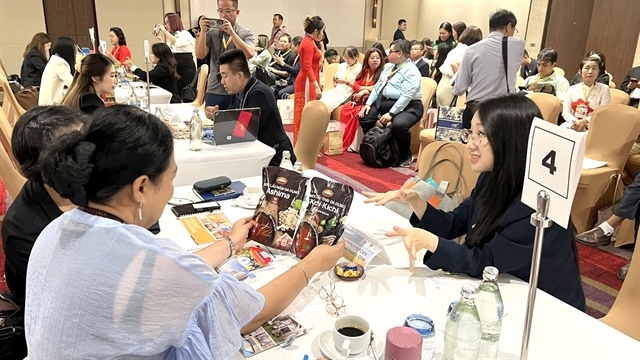
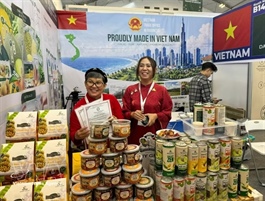
Thai customers try Vietnamese food at Vietnamese Week 2026 in Bangkok, Thailand. — VNS Photo Mai Hương |
A handshake with a foreign buyer is only the beginning for Vietnamese businesses seeking to expand overseas.
The experience of companies at Vietnamese Week 2026 in Bangkok, Thailand, which ended on September 20, showed that getting a product into an overseas market requires much more than finding a buyer. Businesses need to understand local demand, meet quality and packaging requirements, invest in marketing and build reliable distribution channels.
Thailand, with its geographical proximity and strong retail network, is an important and demanding market for Vietnamese goods. But for many businesses, the experience there is also helping them prepare for markets further afield.
Paul Le, vice president ofVN Trade Promotion at Central Retail in Việt Nam, said Vietnamese businesses had changed significantly in recent years. They were no longer bringing mainly raw materials to overseas markets but were increasingly developing finished products with better packaging, branding and marketing.
He said Central Retail had also helped Vietnamese products reach markets beyond Thailand, including the Czech Republic and the US.
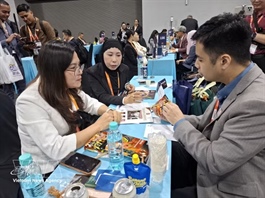
“The handshake is only the first step,” Le told Việt Nam News. "Businesses need to take responsibility for promoting their own products and making them visible in the target market. A product placed among thousands of others in a supermarket cannot attract consumers without proper marketing."
Businesses would also need to understand prices, consumer preferences and even the local festival calendar to plan when and how products should be introduced, he said.
|
Thai customers try Vietnamese food at Vietnamese Week 2026 in Bangkok, Thailand. — VNS Photo Mai Hương |
Market first
For Vietnamese localities, one of the lessons from the Thai market is that having a good local product does not automatically mean it can be sold overseas.
According to Nguyễn Thanh Phong, vice chairman of the People's Committee of An Giang Province, the province has many strong agricultural products, but most have so far served the domestic market. Its participation in international supply chains remain limited, particularly through major retail groups.
The province therefore plans to work more closely with foreign retailers such as Central Retail to help farmers, cooperatives and businesses develop products that meet domestic and international standards, with sufficient production scale and a clear sales plan.
“The question is not what we have, but what the market needs,” Phong said.
The same approach is being taken by Đà Nẵng. The city brought products including Ngọc Linh ginseng, coffee and instant Mì Quảng noodles to Thailand, but carefully selected what to showcase because Thai buyers have strict requirements.
The city has introduced support policies for packaging and trade promotion, with the aim of helping businesses improve their products and access both domestic and overseas markets.
Phong said An Giang also wanted to learn from other Vietnamese localities whose products had already entered foreign supermarket chains. He cited Phú Quốc fish sauce as an example, noting that having a well-known product would not be enough if businesses do not know how to meet the requirements of a modern retail system.
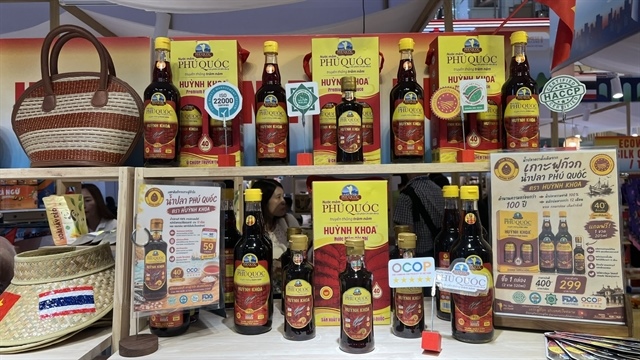
Thai customers try Vietnamese food at Vietnamese Week 2026 in Bangkok, Thailand. — VNS Photo Mai Hương |
The experience highlights a broader challenge for Vietnamese businesses: moving from selling what they produce to producing what overseas consumers want.
Raising standards
The shift is already visible in products brought to Thailand. According to Central Retail, Vietnamese companies have made significant improvements in packaging, while some products have moved from basic agricultural materials to finished goods with clear branding and a more attractive presentation.
That change is important as consumers and importers increasingly demand higher standards of food safety, traceability, packaging and environmental protection.
Võ Hồng Anh, deputy director of the Ministry of Industry and Trade’s Department of Foreign Market Development and Multilateral Trade, said Thai companies could also become partners for Vietnamese businesses in processing, logistics, packaging and distribution.
Such cooperation could help Vietnamese companies add value to their products and meet stricter requirements in Thailand and other international markets, she said.
Thailand is a key export market for Việt Nam. Bilateral trade reached a record US$22.1 billion in 2025, and the two countries are targeting US$25 billion. Thailand is Việt Nam’s largest trading partner in ASEAN, while Việt Nam is Thailand’s second-largest trading partner in the bloc.
Thailand's proximity also gives it an advantage over distant markets such as Europe and the US, where longer transport times and higher logistics costs can make market access more difficult.
More than one market
For some businesses, Thailand is already one of several overseas markets rather than an end destination.
Ban Me Gold, a coffee producer, has exported to the US and has a presence in the South Korean market. The company is developing different product lines for markets such as Japan, Dubai and Malaysia.
Võ Tuấn Anh, the company’s deputy director of Trade Promotion, said the company tried to retain a Vietnamese identity while adapting products to the preferences of individual markets.
For example, its coffee gift sets include a traditional Vietnamese metal filter. At the same time, packaging and product formats are adjusted for different markets.
The approach reflects an increasingly important lesson for Vietnamese exporters: going overseas does not mean selling exactly the same product everywhere. A Vietnamese identity can remain, while products, packaging and marketing are adapted to local consumers.
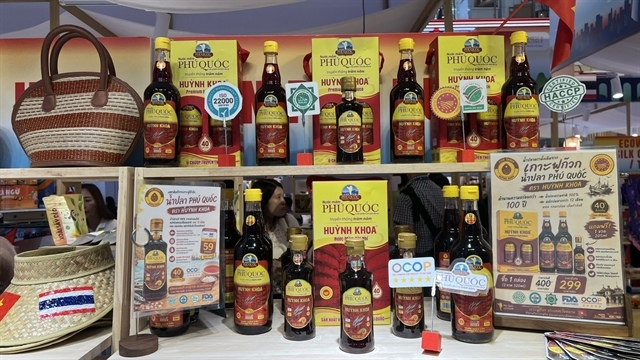
Thai customers try Vietnamese food at Vietnamese Week 2026 in Bangkok, Thailand. — VNS Photo Mai Hương |
Going global
For smaller businesses, the process can start long before the first export order. Quách Thị Vân Anh, commercial director for domestic and international markets at Sinh Dược Cooperative in Ninh Bình, told Việt Nam News that the cooperative had spent 10 years developing its products before participating in an international trade event for the first time.
It had prepared its products for overseas markets by registering them under ASEAN standards, obtaining certification and preparing for ISO 22000 certification. Its factory also has US FDA certification, while some products use organic ingredients sourced from its own production areas.
The cooperative has also designed products with English names and information on ingredients and uses, while planning to further adapt packaging and messages for international consumers.
At the trade event in Thailand, a Central Retail buyer showed interest in Sinh Dược’s herbal soap products, giving the cooperative direct feedback on fragrance, packaging and price.
Such direct feedback would be valuable for smaller businesses entering new markets, Vân Anh said.
The experience of Vietnamese businesses in Thailand therefore goes beyond the sales generated by a single trade event. It shows the steps businesses need to take to build products that can compete in different markets – from understanding consumers and improving packaging to meeting international standards and finding the right distribution partners.
The Ministry of Industry and Trade is also shifting its trade promotion approach towards digital platforms and e-commerce, while its Go Global programme aims to help Vietnamese businesses build their capacity to enter international markets.
For Vietnamese companies, Thailand is a useful market to test products and learn from buyers, but the bigger goal is to use that experience to enter more international markets.
- 07:54 26/09/2026