Women-led firms urged to strengthen sustainable trade to boost exports
Women-led firms urged to strengthen sustainable trade to boost exports
Many women-led businesses still face barriers in accessing international markets, information on new standards, business networks and trade connections
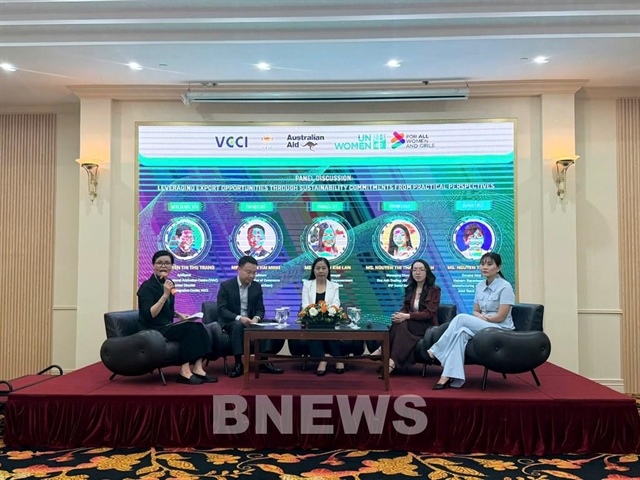
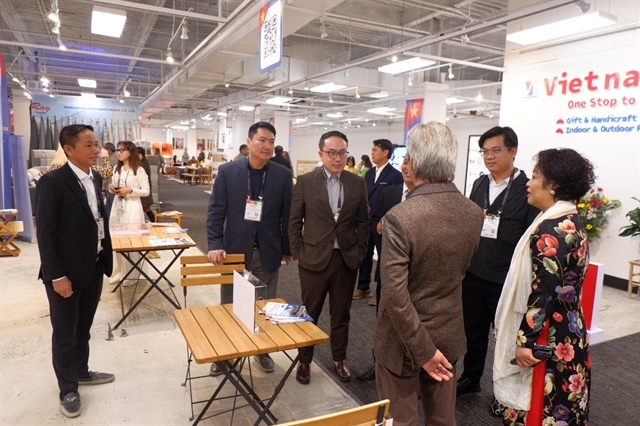
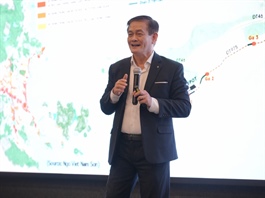
The panel discussion at the conference on sustainable trade practices for effective exports by women-owned and gender-responsive enterprises in Hà Nội on August 27. — VNA/VNS Photo |
Women-owned and gender-responsive enterprises in Việt Nam need to strengthen sustainable trade practices, improve transparency and meet increasingly demanding international standards to expand exports and move higher up global supply chains, heard a conference in Hà Nội on August 27.
The conference was jointly held by Việt Nam Women Entrepreneurs Council (VWEC) in cooperation with UN Women and IPPG under a project funded by the Australian Government through the Mekong-Australia Partnership and implemented by UN Women.
Nguyễn Kim Lan, manager of UN Women Việt Nam’s Women’s Economic Empowerment Programme, said export markets are imposing increasingly stringent requirements on businesses to demonstrate their commitment to sustainable development, including environmental, labour, social responsibility, corporate governance and gender equality standards.
“These trends are reshaping the way businesses access and participate in global supply chains,” she said, adding that UN Women is working with partners to help women-owned and gender-responsive businesses improve competitiveness, access markets and participate more deeply in domestic and international supply chains.
VWEC’s Deputy Chairwoman Mai Thị Diệu Huyền said that more than 20 per cent of small- and medium-sized enterprises (SMEs) in Việt Nam are women-owned, while women account for 51 per cent of enterprise ownership structures.
However, many women-led businesses still face barriers in accessing international markets, information on new standards, business networks and trade connections, she said.
Businesses need to standardise production processes, improve traceability, working conditions and environmental management, while strengthening transparency and gender-responsive practices, Huyền said said.
They can also make greater use of the free trade agreement (FTA) ecosystem to access preferential financing, technical support, standards advice and connections with larger supply chains, she added.
Việt Nam has benefited from a network of 17 FTAs, but tariff preferences alone are no longer enough to secure orders or ensure success in overseas markets, Ngô Chung Khanh, deputy director of the Ministry of Industry and Trade's Multilateral Trade Policy Department, said.
“Zero tariffs do not mean zero barriers," Khanh said, noting that exporters still need to meet requirements on traceability, sustainability, product safety, labelling, packaging and corporate responsibility.
New-generation FTAs have expanded beyond traditional commitments on tariffs, rules of origin, customs procedures and technical barriers to trade to cover labour, environmental protection, government procurement, as well as technology, economic security, sustainable supply chains, green growth and the digital economy.
Businesses therefore need to shift from competing mainly on low prices towards building reliability and sustainability, Khanh said.
He stressed the ability to meet higher standards will determine whether Vietnamese companies could retain markets and become suppliers in global value chains.
Nguyễn Thị Thu Trang, an arbitrator at the Việt Nam International Arbitration Centre, said that next-generation FTAs offer businesses opportunities beyond tariff reductions by encouraging them to upgrade production, corporate governance and operating standards to access demanding markets.
Trang urged businesses to proactively prepare for the requirements of export markets.
She pointed out that the EU, for example, has introduced a wide range of measures under the European Green Deal, including the Carbon Border Adjustment Mechanism (CBAM), the EU Deforestation Regulation (EUDR), ecodesign requirements and technical and sanitary standards, as well as environmental and labour due diligence requirements across supply chains.
Businesses should prepare proactively rather than wait for market requirements to change, Trang said.
Vietnamese companies should identify mandatory and voluntary standards in each target market and raise their internal standards sufficiently to serve multiple markets, she said.
- 15:44 27/08/2026