Resolution 10 sets ambitious targets to increase localisation
Resolution 10 sets ambitious targets to increase localisation
Resolution 10-NQ/TW sets ambitious targets to increase the localisation rate and strengthen domestic supply chains. Prof. Dr Andreas Stoffers, FOM University of Applied Sciences analyses the biggest barriers preventing Vietnam from achieving higher localisation compared to other ASEAN countries.
|

Resolution 10-NQ/TW comes at a critical time, as Vietnam must move beyond being merely a manufacturing hub to becoming a centre for technology, knowledge, management expertise, and value creation.
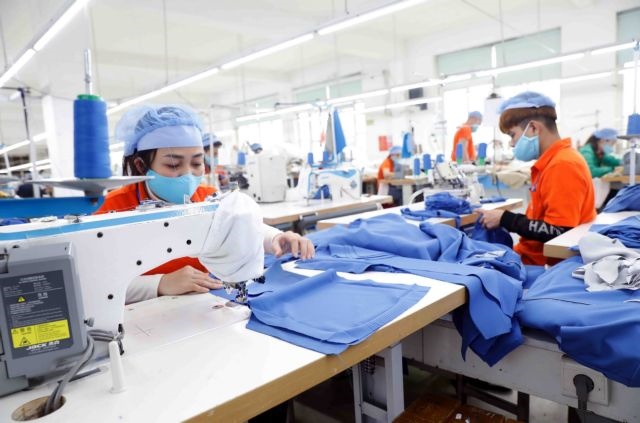
Achieving this will be challenging. While the Foreign Direct Investment (FDI) sector is highly productive and globally integrated, many Vietnamese small and medium-sized enterprises (SMEs) remain at the lower end of the value chain, with limited access to finance, modern management practices, international certifications, and skilled workers.
Many are also unable to meet multinational corporations’ requirements on quality, reliability, scalability, supply stability, and data security. Meanwhile, multinational companies often bring established supplier networks, increasing competition for local firms. Vietnam also lacks stronger coordination in developing industrial clusters across provinces.
The solution is not to impose localisation quotas, but to strengthen domestic capabilities. Upgrading SMEs should be the priority, with foreign-invested enterprises playing a more active role through technical support, training, audits, long-term procurement plans, and local supplier development. Vietnam should also recognise the importance of specialised SMEs, similar to Germany’s Mittelstand, in building a competitive industrial base.
Resolution 10 marks an important shift in FDI policy, from maximising investment inflows to ensuring foreign investment drives the growth of Vietnam’s own industries. To achieve this, investment incentives should be linked to measurable outcomes through clear Key Performance Indicators, such as local sourcing, supplier development, skilled employment, Research and Development (R&D) activities, university collaboration, and environmental compliance.
At the same time, Vietnam must strengthen legal certainty through robust intellectual property protection, transparent regulations, efficient dispute resolution, and stable policies. The government should provide strategic direction and incentives without undermining private-sector autonomy, in line with Resolution 68.
Finally, improving practice-oriented education and vocational training is essential to build a highly skilled workforce capable of supporting higher-value investment. By combining these measures, Vietnam can use FDI not only as a source of capital but also as a catalyst for technology transfer, knowledge development, and its long-term goal of becoming an industrialised nation by 2045.
It is essential to develop a clear roadmap for increasing localisation and integrating Vietnamese companies more deeply into global value chains. Without a well-defined plan, efforts risk becoming fragmented. Rather than attempting to cover the entire value chain across all high-tech industries, Vietnam should adopt a phased approach, focusing first on areas where domestic companies can quickly build capabilities and become competitive.
A three-phase roadmap would be appropriate.
The first phase (2026–2027) should focus on assessing current capabilities, identifying priority sectors, and laying the foundations for implementation. Particular attention should be given to strengthening human capital through practical education and workforce training, while pilot programmes can begin in selected industries.
The second phase (2027–2030) should concentrate on expanding supplier capacity to achieve the objectives of Resolution 10: integrating 10,000 domestic enterprises into FDI supply chains and developing 500–1,000 Tier 1 suppliers. This will require significant progress in certification, quality standards, digitalisation, financing, management capabilities, and industrial cluster development.
From 2030 onwards, the focus should shift towards establishing "Technology from Vietnam" to complement the traditional "Made in Vietnam" model. This means investing in indigenous innovation and enabling Vietnamese companies to move into higher-value activities such as design, R&D, intellectual property, brand building, and technology-intensive services.
Three sectors should be prioritised throughout this roadmap.
The first is semiconductors, where Vietnam's greatest near-term opportunities lie in assembly, testing, packaging, design services, cleanroom operations, supply chain management, materials, logistics, and engineering services, rather than leading-edge chip fabrication.
The second is advanced manufacturing. Vietnamese enterprises, particularly SMEs, need support to adopt automation, sensor technology, quality management systems, industrial software, robotics, and modern maintenance capabilities to become more competitive suppliers.
The third is finance, which is a key enabler of localisation. Developing domestic suppliers requires long-term capital, making it essential to accelerate the development of Vietnam's international financial centre in Ho Chi Minh City and the regional financial centre in Danang. At the same time, fintech, venture capital, and sustainable financing instruments should be expanded to support innovation. A stronger financial sector, developed alongside the country's industrial base, will generate significant spillover benefits.
Ultimately, Vietnam needs not only more FDI but better-quality FDI that helps domestic companies acquire technology, management expertise, and higher-value capabilities. In this regard, Resolution 10 provides the right foundation for raising localisation and strengthening Vietnam's position in global value chains.
- 14:33 13/08/2026