Real estate gains momentum from urban expansion
Real estate gains momentum from urban expansion
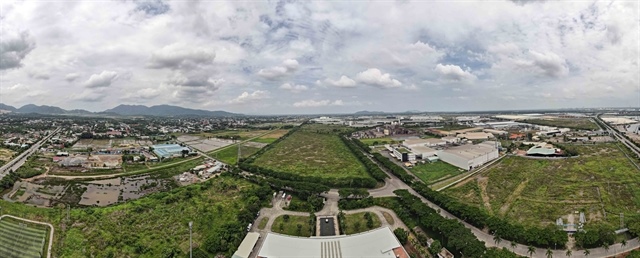
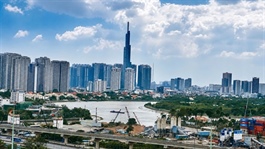
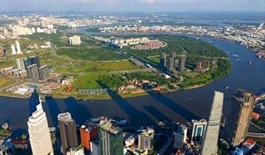
Following the expansion of its development space, Ho Chi Minh City is emerging with new growth hubs centred on industry, high technology, finance and logistics, creating new opportunities for the real estate market while also placing greater demands on infrastructure.
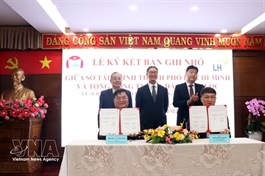
Experts at the 2026 Real Estate Forum titled “Super City, Super Opportunities” in Ho Chi Minh City on August 25, said real estate is among the sectors benefiting most visibly from the city’s expanded development.
According to Dung Duong, managing director of CBRE Vietnam, following the regional merger, the combined industrial land and ready-built warehouse stock in the former Binh Duong area has increased nearly sixfold to more than 15,000 hectares, while a wider range of price points is giving investors more options.
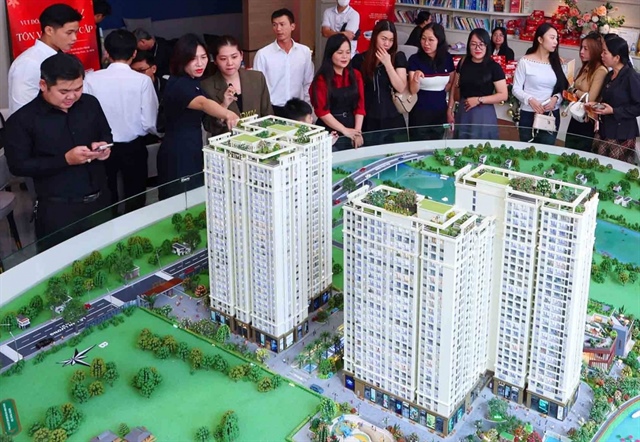
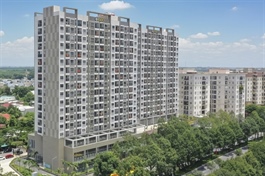
“In the housing segment, investment capital is shifting towards suburban areas, resulting in a more diverse supply and wider range of price points. Average primary apartment prices across the expanded Ho Chi Minh City stand at around VND76 million ($2,900) per square metre, compared with $3,500 per sq.m in the former city area, while secondary market prices average around $2,400 per sq.m,” Dung said at the event.
Dung forecasts that both primary and secondary property prices will begin to level off from 2026 as supply increases, while the market could continue to benefit over the next three years from the city’s expanded development space.
“In the long term, the international financial centre is expected to become a key driver of capital attraction and commercial real estate growth, while Ho Chi Minh City will develop towards a polycentric, multi-nodal urban model. However, to fully unlock the potential of these new growth hubs, the city needs to develop a well-connected infrastructure network, including expressways, ring roads, metro lines, urban railways, seaports, and free trade zones,” she said.
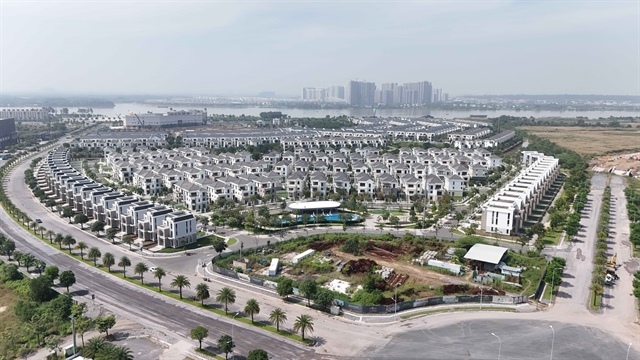
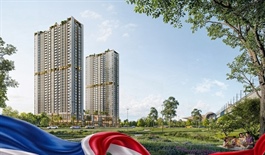
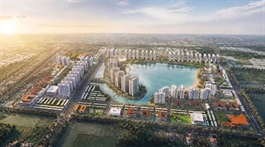
As the urban structure evolves, housing demand is also shifting from standalone residential products towards urban developments, mixed-use projects, and multi-generational housing. From 2026, satellite urban areas are expected to gain further momentum, moving towards an “all-in-one city” model where residents can live, work, shop, and access essential services within their local communities.
Sharing the same view, Nguyen Thi Thanh Huong, vice chairwoman of the Vietnam Association of Realtors, said the new planning vision would create fresh growth momentum and give Ho Chi Minh City greater room to accelerate its development.
According to Huong, the implementation of projects based on a polycentric urban model is gathering pace, opening up new opportunities for the real estate market. However, turning this vision into reality will require removing institutional impediments, while renewing the city’s urban landscape through urban upgrading and population redistribution.
“We need to create a value ecosystem around real estate, so that people can both live and work in the same area. Only by developing urban areas that meet both housing and employment needs can we draw in people to live there. This will be an important trend in population movement in the future,” Huong said.
Kieu Xuan Phan, vice chairman of Nam Mekong Group, said that within a megacity, each growth hub needs to serve distinct functions.
For example, the former Binh Duong area is being positioned as a hub for industrial and high-tech development, talent attraction and foreign direct investment. However, a key question is where people will live and work, and how they will access essential services.
According to Phan, the distance between home and workplaces, dining and other daily activities should not be measured simply in kilometres, but more importantly in travel time. This requires investors and authorities to adopt a new approach to infrastructure investment and spatial planning, giving residents better access to convenient transport networks.
“Over the next 10–15 years, I hope people will be able to live in the former Binh Duong area and travel to central Ho Chi Minh City in just 15-20 minutes via metro and public transport,” Phan said.
Prof. Dr Nguyen Duc Thuan, chairman of the Vietnam Association of Corporate Managers, likewise said that metro lines, ring roads, expressways, seaports and airports form the circulatory system of a megacity. However, building new infrastructure is only a necessary condition; the sufficient condition is to organise urban space around that infrastructure.
“Development should follow the transit-oriented development model, turning each station and transport hub into an integrated centre for housing, commerce, services, employment and public spaces. Infrastructure should not merely serve the city; it should help shape the city,” Thuan said.

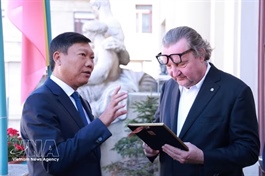
Experts discussed at the event |
- 15:16 26/08/2026