HCM City aims to make logistics key economic sector
HCM City aims to make logistics key economic sector
HCM City is rolling out a comprehensive logistics development strategy aimed at lowering costs to 11–14 per cent of its gross regional domestic product by 2030, positioning the city as a modern logistics hub and strengthening its role in global supply chains.
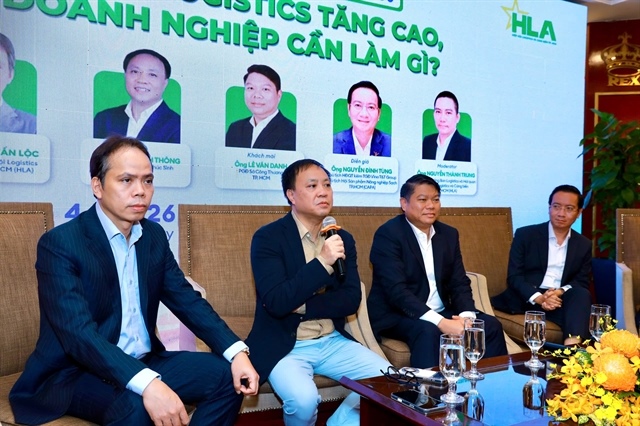
Panellists discuss measures to reduce logistics costs and strengthen HCM City's role as a regional logistics hub at the 90th HUBA Business Coffee programme on July 4. — Photo courtesy of HUBA |
According to the Ministry of Industry and Trade's 2025 report, logistics costs in Việt Nam accounted for 17–18 per cent, considerably higher than in neighbouring countries such as Singapore (8 per cent) and Malaysia (11 per cent).
The high costs increase production expenses, reduce corporate profitability, and weaken the competitiveness of Vietnamese goods in international markets.
Speaking at the 90th Business Coffee programme held by the HCM City Union of Business Associations on July 4, Lê Văn Danh, deputy director of the city Department of Industry and Trade, said reducing logistics costs is no longer simply about cutting transport and production expenses, but has become a strategic priority to enhance the competitiveness of businesses amid intensifying global competition.
Recognising the sector's importance, HCM City has designated logistics as one of its five key economic sectors and identified it as a spearhead industry in the City Party Congress Resolution for the 2025-30 term.
It aims to lower logistics costs to 11-14 per cent of GRDP during 2026-30, lower than the national target of 15-16 per cent, he said.
To achieve the target, the city has adopted an action plan comprising nine groups of solutions, with priority given to developing integrated transport and logistics infrastructure through a multimodal transport network.
Major infrastructure projects, including ring roads No. 3 and 4, new expressways and the widening of the HCM City–Long Thành–Dầu Giây Expressway, are expected to improve regional connectivity and shorten freight transport times.
The city is also planning dedicated railway lines linking industrial parks with seaports, particularly the Cái Mép–Thị Vải Port, enabling greater use of cost-effective, high-volume rail freight while reducing pressure on road transport.
For inland waterways, HCM City has proposed that the Government decentralise the management of major navigation channels, allowing it to dredge and upgrade waterways.
According to Danh, more efficient use of inland water transport would shift freight from roads and help lower logistics costs.
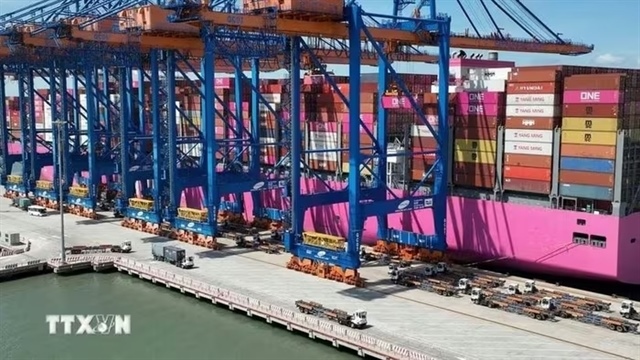
In the longer term, HCM City plans to develop a modern port system centred on the Cái Mép Hạ Port and proposed Cần Giờ International Transshipment Port to strengthen its position in international maritime logistics.
Panellists discuss measures to reduce logistics costs and strengthen HCM City's role as a regional logistics hub at the 90th HUBA Business Coffee programme on July 4. — Photo courtesy of HUBA |
Digital and green transformation
Alongside infrastructure development, the city has identified digital transformation, green transition and human resource development as three key pillars for enhancing the competitiveness of its logistics sector.
Danh said major export markets like the US and Europe are introducing increasingly stringent sustainability requirements, including environmental, social and governance (ESG) standards and the Carbon Border Adjustment Mechanism (CBAM).
These developments require logistics providers and manufacturers to transform their operations to remain competitive.
Digital technologies can help businesses optimise transport operations, warehouse management and supply chain coordination while reducing operating costs.
Green transformation enables companies to cut emissions, improve energy efficiency and comply with increasingly demanding international environmental standards.
The city also plans to establish a specialised logistics training centre for 80 per cent of the sector's workforce to get formal training by 2030, he said.
Another key initiative is the proposed development of free trade zones integrated with logistics centres under the draft Law on Special Urban Areas.
The centres would benefit from preferential taxation, land use, and investment policies to attract global logistics companies and integrate Việt Nam further into international supply chains, he added.
Đặng Minh Phương, chairwoman of the HCM City Logistics and Seaport Association, said Vietnamese enterprises need to rethink their approach by making better use of the sharing economy.
Instead of investing individually in vehicles and warehouses that often operate below capacity, businesses could share warehouses, transport fleets and distribution networks to improve asset utilisation and reduce costs, a model that has proven successful in countries such as Singapore, she said
She also encouraged companies to use multimodal transport by combining road, rail, and inland waterways, accelerate the adoption of artificial intelligence and digital technologies in supply chain management, comply with international green standards, implement vendor-managed inventory models to optimise cash flows and inventory management, and outsource logistics services to focus on their core business.
- 15:30 06/07/2026