Businesses urged to join carbon market
Businesses urged to join carbon market
Deputy Prime Minister Nguyen Van Thang has urged businesses to be transparent with environmental data and participate in the carbon market after the exchange begins its pilot operation.
|
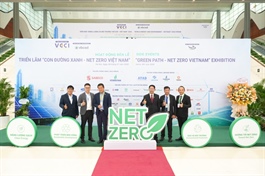
At an energy and environment forum on July 8, DPM Thang stated that businesses from all economic sectors are the driving force determining the success or failure of the net-zero emission roadmap.
“The business community needs to review technology, be transparent with environmental data, and participate in the carbon market. In the long term, they need to take the lead in building emission reduction roadmaps and integrating environmental, social, governance (ESG) criteria into their business strategies,” DPM Thang said.
"The business community must identify green transformation and ESG governance as a vital strategy and an opportunity to enhance competitiveness. The government will continue to operate and improve the domestic carbon exchange, aiming to create a transparent and effective carbon pricing mechanism," he added.
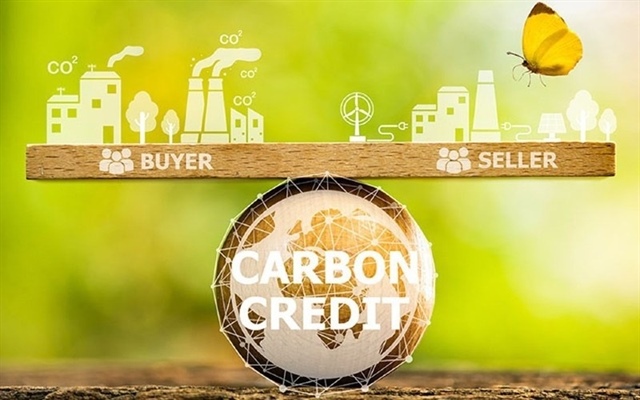
In late June, the Vietnamese carbon exchange recorded its first transactions, with a closing price of VND130,000 ($5.20) per tonne of CO2. With an allocated quota of over 511 million tonnes of CO2, experts estimate the total market capitalisation at VND66.5 trillion ($2.66 billion).
Deputy Minister of Agriculture and Environment Le Cong Thanh said, “Developing the carbon exchange is a major direction in Vietnam's net-zero roadmap. The exchange is a tool to support the achievement of emission reduction goals, helping businesses participate in carbon credit trading and offsetting mechanisms, and access green financial resources in the future.”
The Ministry of Agriculture and Environment is committed to removing policy barriers, improving implementation capacity, and optimising processes to make it easier for businesses. According to the ministry, energy transition is central to the emissions' reduction roadmap, as this sector is projected to account for 73 per cent of total national emissions under the business-as-usual scenario. The energy sector faces a dual objective: reducing emissions and ensuring national energy security, in the context of Vietnam's target of achieving an average annual GDP growth of 10 per during the 2026-2030 period.
DPM Thang said, “The energy transition needs to be implemented according to a suitable roadmap, avoiding the abrupt elimination of traditional energy sources, such as coal-fired power plants.”
“The use of coal-fired power should aim to improve efficiency, apply new technologies to strictly control emissions, and gradually reduce its proportion in the electricity structure. The government is steadfast in its principle of not sacrificing the environment for growth. Vietnam expects international organisations and developed countries to provide more practical support to the country to realise the emissions reduction targets as set out in the roadmap,” he added.
- 14:46 09/07/2026