Seafood exporters deliver strong Q1 though challenges persist
Seafood exporters deliver strong Q1 though challenges persist
Vietnam's leading seafood producers posted strong first-quarter earnings and export growth, but rising trade barriers, compliance costs and market uncertainty continue to cloud the industry's outlook for 2026.
Vinh Hoan Corporation recently released its first-quarter financial results, reporting consolidated revenue of approximately $118.2 million, up 12 per cent on-year, while net profit rose sharply by 38 per cent to about $10.6 million.
The company's core basa fish segment recorded revenue growth of more than 14 per cent and accounted for 55 per cent of total revenue, serving as the primary driver behind their strong start to the year.
Also benefiting from robust global demand was Nam Viet Corporation, which posted a 66 per cent increase in net revenue to approximately $73.8 million, while net profit surged 48 per cent to around $7.8 million.
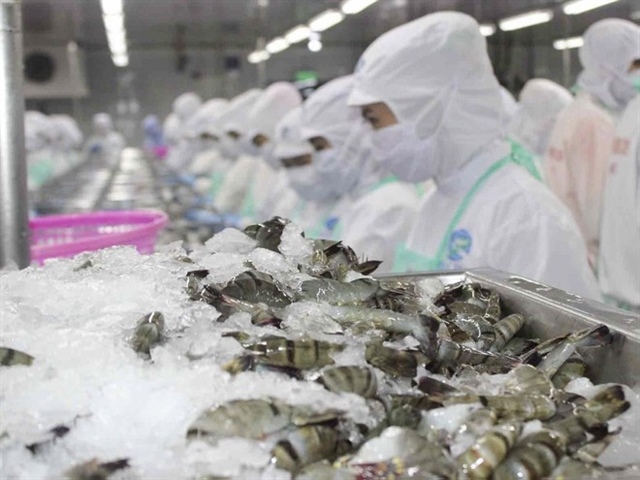
Seafood companies continue to face significant risks in 2026 despite improving business performance |
Beyond basa fish, Nam Viet has gained attention for expanding exports of tilapia, a whitefish species that is increasingly favoured as a substitute for more expensive whitefish products amid ongoing pressures on the global economy.
The positive picture was also reflected in the financial performance of shrimp exporters. For instance, Sao Ta Foods JSC reported Q1/2026 net profit of approximately $2.03 million, up 34.6 per cent on-year, despite a nearly 30 per cent decline in revenue to around $56 million.
According to PAN Group, Sao Ta's parent company, the sharp revenue decline resulted from the company's deliberate decision to limit exports to its key market, the United States, while awaiting the outcome of anti-dumping proceedings. At the same time, disease outbreaks affecting shrimp farming reduced the supply of raw shrimp, further weighing on revenue.
Nevertheless, Sao Ta was able to optimise costs thanks to its self-sufficiency in raw material supply. According to the company, the sharp increase in earnings stemmed largely from favourable results from the settlement of its late-2025 shrimp farming season.
Meanwhile, Minh Phu Seafood Corporation reported a twelvefold increase in after-tax profit during the period, reaching nearly $8.6 million, while the company’s revenue climbed more than 98 per cent to approximately $228 million.
The comeback of the company was driven by improved cash-flow management and a strategic focus on value-added products, which significantly enhanced profit margins.
The performances of Sao Ta and Minh Phu underscore the resilience and adaptability of Vietnam's shrimp producers at a time when competition in international markets is intensifying and the United States – one of the industry's most important export destinations – continues to pose challenges through trade remedies and protectionist measures.
In the first five months of 2026, Vietnam's seafood export value reached $4.67 billion, up 11 per cent on-year.
Combined with the strong financial results reported by leading industry players, the figures point to a promising recovery trend for the seafood sector.
However, according to the Vietnam Association of Seafood Exporters and Producers (VASEP), underlying market conditions are not entirely favourable, as buyers have become more cautious and divergences among export markets are becoming increasingly apparent.
Notably, tightening standards and growing trade protectionism are creating headwinds for the industry.
This was reflected in a 10 per cent decline in seafood exports to the United States and a 2.2 per cent drop in exports to EU during the first five months of the year.
These two markets have been among the most proactive in introducing trade defence measures, traceability requirements, sustainability standards and policies aimed at combating illegal fishing.
For the shrimp industry, the most significant challenge stems from anti-dumping litigation involving warm-water shrimp exports to the United States.
Although preliminary tariff rates have been reduced substantially compared with earlier findings, they continue to place considerable pressure on corporate profit margins.
For the basa fish sector, challenges arise from rising costs of fingerlings, production, feed and transportation, all of which have continued to increase since 2025. As a result, many farming areas remain cautious about expanding cultivation acreage.
In 2025, Vietnamese basa fish exporters shipping to the United States benefited from a zero per cent anti-dumping duty, creating better conditions for business. Nevertheless, VASEP cautioned that future trade defence measures in the US market remain highly uncertain.
VASEP forecasts that Vietnam's seafood exports could grow by 8-10 per cent in 2026, surpassing $12 billion if market conditions remain favourable and trade remedy obstacles are effectively addressed.
Conversely, if compliance costs, transportation expenses, logistics costs and trade barriers continue to persist, growth in the seafood industry is likely to slow significantly in the latter part of the year, particularly for shrimp exporters and fishing companies.
- 13:06 10/06/2026