Resolution 10 marks new chapter in Vietnam’s foreign investment strategy
Resolution 10 marks new chapter in Vietnam’s foreign investment strategy
Vietnam is overhauling its approach to foreign investment, prioritising quality, innovation and supply-chain integration as the country seeks to strengthen long-term economic growth and competitiveness.
On June 8, the Politburo issued Resolution No.10-NQ/TW, setting out a new development framework for the foreign-invested enterprises.
Analysts at BIDV Securities JSC (BSC) describe the move as a significant policy shift, marking Vietnam’s transition from a strategy centred on foreign investment attraction to one that treats the foreign-invested sector as an integral driver of long-term economic growth.
The resolution builds on Resolution 50, issued in 2019, which focused primarily on improving the quality and effectiveness of foreign investment inflows. Resolution 10 takes a broader approach by aligning the development of the foreign-invested sector with Vietnam’s wider national development objectives.
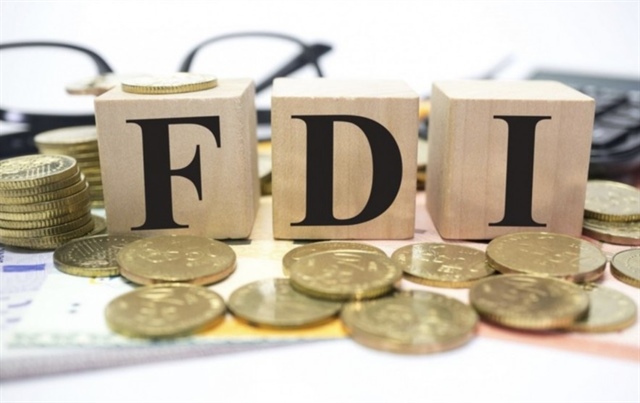
Vietnam is repositioning the foreign-invested economic sector as a core component of its national development strategy |
At the heart of the new policy is a change in mindset. Rather than prioritising investment volume, Vietnam aims to cultivate investment ecosystems that support strategic industries, innovation and productivity growth.
The fresh resolution promotes the development of industrial clusters, integrated value chains, innovation hubs and technology ecosystems capable of generating broader economic spillovers.
The government is also moving away from incentive schemes based mainly on investment size or sector. Instead, in light of Resolution 10, future support measures will increasingly be tied to project performance, fulfilment of commitments and the actual economic contributions made by investors.
The approach is designed to raise the quality of investment while strengthening accountability throughout the project lifecycle.
While maintaining ambitious investment targets, Resolution 10 places greater emphasis on attracting higher-value capital.
Along with this, Vietnam aims to secure between $200 and $300 billion in newly registered foreign investment and between $150 and $200 billion in disbursed capital during 2026-2030. At the same time, policymakers expect 75 per cent of total FDI to originate from developed economies.
The new resolution also sets targets to deepen domestic participation in global supply chains. Localisation rates in key manufacturing industries are expected to reach 45-50 per cent by 2030, while around 10,000 Vietnamese companies are targeted to become suppliers to multinational corporations.
Vietnam also seeks to engage more leading technology firms and expand R&D activities within the country.
In a notable departure from previous policy frameworks, Resolution 10 incorporates capital market development into the foreign investment agenda.
The government aims to upgrade Vietnam’s stock market status before 2030, develop international financial centres and expand medium- and long-term capital markets.
Foreign investment policies will also be increasingly aligned with environmental, social, and governance standards, green growth objectives and the country’s net-zero emissions commitment.
To support these goals, Resolution 10 outlines a range of policy measures, including continued reforms in investment, land, taxation, data governance and intellectual property regulations.
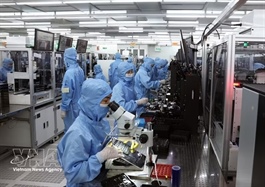
It also calls for mechanisms to engage and support strategic investors while prioritising high-tech sectors such as semiconductors, AI, big data, cloud computing, blockchain, biotechnology, biomedical technology, advanced energy and new materials.
Emphasis is also placed on the development of a highly skilled workforce, the attraction of global talent, and investment in digital infrastructure, green infrastructure, eco-industrial parks and smart industrial zones.
According to BSC Securities, Resolution 10 not only expands upon the foundations laid by Resolution 50, but also significantly broadens Vietnam’s policy ambitions.
By positioning the foreign-invested sector as an organic component of the national economy, the resolution seeks to strengthen economic resilience, accelerate innovation and support sustainable growth through 2030 and beyond, with a long-term vision extending to 2045.
- 16:26 18/06/2026