Growing Halal market offers opportunities for Vietnamese businesses
Growing Halal market offers opportunities for Vietnamese businesses
The Halal market is becoming a promising avenue for businesses in HCM City. With its well-developed manufacturing, trade and service ecosystem and dynamic business community, the city is well positioned to strengthen its role in regional and global Halal supply chains.

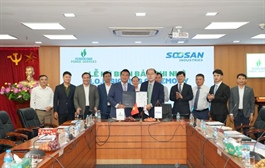
A workshop on the Halal market is held in HCM City on Tuesday. — VNA/VNS Photo |
The rapidly expanding global Halal market is creating significant opportunities for Vietnamese businesses and export sectors capable of meeting its stringent requirements, heard a workshop held in HCM City on Tuesday.
Speaking at the event, organised by the Investment and Trade Promotion Centre of HCM City (ITPC), its Deputy Director Hồ Thị Quyên said that amid global economic uncertainties, rising trade protectionism and increasingly strict standards and traceability requirements, diversifying export markets and identifying new growth drivers have become urgent priorities for businesses. In this context, the Halal market has emerged as one of the world’s most dynamic and promising economic sectors.
According to the State of the Global Islamic Economy Report 2024/2025 by US-based research and advisory firm DinarStandard, the global Muslim population has surpassed 2 billion people, accounting for more than a quarter of the world’s population.
In 2023, Muslim consumers' spending on food, cosmetics, pharmaceuticals, tourism, modest fashion, and media and entertainment services reached US$2.43 trillion and is projected to rise to $3.36 trillion by 2028.
Experts noted that Halal has evolved beyond a certification standard for food products into a comprehensive economic ecosystem covering manufacturing, trade, logistics, finance, tourism and services, making it one of the fastest-growing markets worldwide.
Quyên said the Halal market is becoming a promising avenue for businesses in HCM City. With its well-developed manufacturing, trade and service ecosystem and dynamic business community, the city is well positioned to strengthen its role in regional and global Halal supply chains.
However, she noted that the biggest challenge lies not in market demand but in businesses’ ability to meet technical requirements and standards. Many companies with export-ready products still face difficulties in establishing Halal management systems, controlling input materials, ensuring traceability, and preparing certification documentation.
Nguyễn Thị Trà My from the Halal Certification Agency Vietnam said the Islamic consumer economy is emerging as a new driver of global trade growth. The market is forecast to reach $3.56 trillion by 2029, with food and beverages accounting for around 74 per cent of total spending, followed by Muslim-friendly tourism, pharmaceuticals and cosmetics.
According to the expert, Halal products and services are increasingly regarded not only as religiously compliant goods but also as benchmarks for quality, safety and transparency. Consumers, including non-Muslims, are increasingly choosing Halal-certified products because of their traceability, hygiene standards, sustainability and social responsibility.
Many countries are also moving towards stricter Halal certification requirements for imported goods, particularly food and beverages. Indonesia will enforce mandatory Halal certification from October 17 this year, while members of the Gulf Cooperation Council (GCC), along with Malaysia, Singapore and Türkiye, are tightening regulations on Halal certification and labelling.
Việt Nam currently has around 1,300 Halal-certified enterprises, benefiting from abundant supplies of agricultural, forestry and aquatic products as well as processed foods. However, many firms still face challenges related to limited understanding of Halal culture and standards, inappropriate selection of certification bodies, and shortcomings in supply chain management and raw material control, My stated.
Experts recommended that businesses adopt a long-term approach by identifying target markets, selecting certification bodies recognised by importing countries, standardising production processes, and strengthening trade promotion through specialised international fairs and forums. Such efforts would help improve competitiveness and expand the presence of Vietnamese products in fast-growing Muslim markets, they said.
- 22:02 16/06/2026