Foreign firms drive dairy industry’s green and digital transition
Foreign firms drive dairy industry’s green and digital transition
Changes in consumer demand and commitments to green growth are driving foreign investment in technology and low-emission production, reshaping Vietnam's dairy industry value chain.
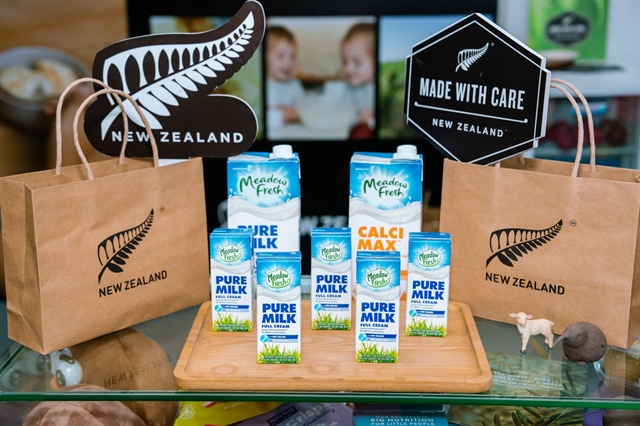
Photo: New Zealand Consulate-General |
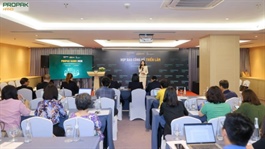
At an industry workshop in Ho Chi Minh City on June 11, Meadow Fresh launched two new products, expanding its premium dairy portfolio in the Vietnamese market.
According to Scott James, New Zealand’s consul general and trade commissioner to Vietnam, the country has long been recognised globally for its high-quality dairy products, supported by favourable natural conditions and sustainable farming practices.
“New Zealand’s high-quality milk is the foundation of the distinctive value and superior quality associated with its dairy products,” James said.
Meadow Fresh applies strict quality control throughout the production process, from farm to finished product, including herd health monitoring technology, hormone-free farming practices, and natural grazing systems on expansive pastures.
The launch reflects growing interest among international dairy companies in Vietnam, where investment in advanced farming technologies, digitalisation, and sustainable production models is increasingly shaping the industry’s development.
Earlier, more than 250 booths from countries and territories with developed dairy industries such as New Zealand, Taiwan, Australia, and Japan, alongside many major domestic brands, gathered at Vietnam Dairy 2026, held in Hanoi in late May, to discuss industry development trends and innovation.
According to Dr. Tran Quang Trung, chairman of the Vietnam Dairy Association, despite making significant progress in recent years, the dairy industry still faces numerous challenges related to quality standards, traceability, and long-term development requirements.
“Experiences and technologies from international businesses will help Vietnamese businesses gain deeper access to emission reduction solutions and apply circular economy principles throughout the entire value chain, from livestock farming and processing to packaging, thereby contributing to the realisation of the government’s net-zero goal,” he said.
Trung explained that digital transformation is becoming a crucial driving force for businesses to improve production and management efficiency. Solutions such as automation, data management, and traceability increase transparency and contribute to quality control, strengthen consumer confidence, and reduce environmental impact.
In fact, many foreign dairy companies are realising this trend through investments in production technology, smart agriculture, and emission reduction initiatives, thereby contributing to promoting the green transformation and digitalisation of the Vietnamese dairy industry.
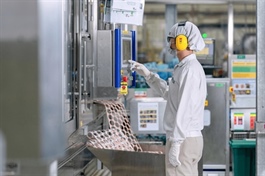
After more than 30 years of operation in Vietnam, Nestlé is implementing a comprehensive digital transformation from marketing and sales to production and supply chain to optimise operations and enhance customer experience. In the manufacturing sector, businesses are accelerating the development of smart factory models with applications of robots, AI cameras, and real-time data analysis systems to improve productivity, ensure food safety, and enhance traceability.
According to Le Thi Hoai Thuong, external relations director of Nestlé Vietnam, digital transformation has become a core element in improving the efficiency of the entire dairy value chain, while enhancing transparency, food safety, and traceability.
“We are implementing digitalisation throughout production to the supply chain, while placing people at the centre of the transformation process. The goal is to share best practices, promote technology application, and strengthen cooperation towards a more efficient and transparent dairy industry,” Thuong said.
In parallel with investing in technology and digital transformation, foreign businesses are also focusing on developing specialised nutritional product lines to meet the increasingly diverse needs of Vietnamese consumers.
Taguchi Yoshihiro, marketing director of Morinaga Nutritional Foods Vietnam, stated that with over a century of research and development experience in Japan, Morinaga is focusing on providing high-quality nutritional products to meet the increasingly diverse health needs of Vietnamese consumers.
“We believe that the demand for specialised nutritional products and long-term healthcare solutions in Vietnam will continue to grow strongly in the coming years. This trend is driven by increasing health awareness, rapid urbanisation, and the expansion of a middle class that increasingly values high-quality and functional products,” Yoshihiro noted.
The increasing involvement of international businesses is taking place against the backdrop of a Vietnamese market that still has significant growth potential. According to the Vietnam Dairy Association, per-person milk consumption is currently only about 36kg per year, significantly lower than many developed countries such as Denmark, France, the US or Japan.
The dairy industry development strategy to 2030, with a vision to 2045, aims for an average annual growth rate of 12-14 per cent. By 2030, the production of processed liquid milk is expected to reach approximately 4.2 billion litres, while domestic raw fresh milk production will reach 2.6 billion litres, meeting 60-65 per cent of processing needs.
To realise these goals, the Vietnamese dairy industry needs technology and investment capital while also addressing the challenge of securing a domestic supply of raw materials.
According to TH Group, Vietnam has all the conditions to improve its self-sufficiency in fresh milk raw materials. The company predicts that to meet about 70 per cent of market demand by 2035, Vietnam needs to develop a herd of approximately 700,000 cows using a concentrated farming model, applying high technology and modern management.
The sector’s growth prospects continue to draw in investor interest. Earlier in June, DealStreetAsia reported that TH Group was in discussions with several international investment funds to raise around $1 billion through the sale of a minority stake.
Meanwhile, Le Hoang Minh, executive director of Production at Vinamilk, believes that for an industry closely linked to health and quality of life, innovation extends beyond production technology to how businesses engage with and understand consumers.
“We have established a clear roadmap, targeting emission reductions of 15 per cent by 2027, 55 per cent by 2035, and achieving net-zero emissions by 2050,” Minh said.
Vinamilk currently operates a nationwide network of 14 green farms and 14 modern production facilities, while its products have reached 63 export markets worldwide. The company is implementing a range of technological solutions to reduce emissions and improve operational efficiency, including smart warehouse systems that cut energy consumption by up to 70 per cent compared to conventional models, robots that help reduce internal transport-related emissions by around 60 per cent, and heat recovery and reuse systems capable of reclaiming up to 90 per cent of the thermal energy generated during production.
- 16:10 26/06/2026