Comprehensive Strategic Partnership expected to create substantial momentum for Vietnamese and Thai enterprises
Comprehensive Strategic Partnership expected to create substantial momentum for Vietnamese and Thai enterprises
Việt Nam News reporters Khánh Chi, Thu Hằng and Mai Hương spoke with representatives of Vietnamese and Thai businesses to gather their assessments of investment and business potential in each other’s markets following the elevation of bilateral ties to a Comprehensive Strategic Partnership.
On the occasion of the Party General Secretary and State President Tô Lâm’s official visit to Thailand, Việt Nam News reporters Khánh Chi, Thu Hằng and Mai Hương spoke with representatives of Vietnamese and Thai businesses to gather their assessments of investment and business potential in each other’s markets following the elevation of bilateral ties to a Comprehensive Strategic Partnership. They also shared key insights and recommendations for enterprises seeking to operate and expand across both countries.

Đường Thu Hương, chairwoman of Việt Nam Thai Chamber of Commerce in Bangkok. Photo courtesy of Đường Thu Hương |
Đường Thu Hương, chairwoman of Việt Nam Thai Chamber of Commerce in Bangkok
The elevation of Việt Nam–Thailand relations to a Comprehensive Strategic Partnership in 2025 marks a new chapter of economic cooperation and regional connectivity. I believe this development will create substantial momentum for Vietnamese enterprises seeking to expand into Thailand and the broader ASEAN market.
Thailand remains one of the region’s most dynamic economies, with strong infrastructure, advanced supply chains, sophisticated consumer markets and well-established regional trade networks. At the same time, Vietnamese enterprises are increasingly competitive, adaptive, and internationally minded. The complementarities between our two economies are significant.
Vietnamese businesses can leverage Thailand not only as a destination market, but also as a strategic gateway for regional expansion, particularly in logistics, manufacturing, tourism, retail, food processing, renewable energy, digital economy and healthcare-related sectors. In addition, stronger political trust between the two governments sends a positive signal to investors and creates a more favourable environment for long-term bilateral cooperation.
In the coming years, I believe Vietnamese enterprises should prioritise sectors where both countries possess complementary strengths and where regional demand is expected to grow strongly.
These include: agriculture and food processing, especially high-quality and sustainable products; tourism, hospitality, and wellness industries; renewable energy and green transition initiatives; digital economy, e-commerce, fintech, and technology services; logistics and supply chain integration; and healthcare, pharmaceuticals, and elderly care services.
Thailand has strong industrial ecosystems and international distribution channels, while Việt Nam offers a young workforce, manufacturing capabilities, and rapidly growing innovation capacity. Strategic partnerships between businesses from both countries can therefore generate considerable regional value.
Vietnamese enterprises entering the Thai market should pay close attention to localisation, long-term relationship building and regulatory compliance.
Thailand is a highly competitive market with discerning consumers and well-developed business standards. Success requires patience, market understanding and a commitment to quality and professionalism.
Businesses should invest time in understanding Thai consumer behaviour, business culture, legal frameworks and partnership expectations. Establishing trusted local networks is particularly important in Thailand.
At the same time, Vietnamese companies should approach the market with confidence. In recent years, many Vietnamese brands have demonstrated strong competitiveness, innovation, and international standards. With proper preparation and strategic positioning, Vietnamese enterprises can achieve meaningful and sustainable success in Thailand.
Nguyễn Phi Hà, chairman of Siam Thai Son Co.,Ltd, Hanoi Corner Food Innovation

Đường Thu Hương, chairwoman of Việt Nam Thai Chamber of Commerce in Bangkok. Photo courtesy of Đường Thu Hương |
The upgrade of Việt Nam-Thailand ties to a Comprehensive Strategic Partnership carries not only diplomatic significance but also heralds a new era of deeper economic collaboration between the two nations. This is a pivotal moment for Vietnamese enterprises to look toward Thailand as a prime destination for investment, trade and regional connectivity within ASEAN.
Thailand boasts one of Southeast Asia's leading economies in trade, retail, tourism, and services. Meanwhile, Việt Nam holds strengths in manufacturing, a young workforce, rapid adaptability and an increasing number of brands gaining international recognition. The two economies are clearly complementary. By effectively leveraging current bilateral opportunities, Vietnamese businesses can certainly view Thailand as a strategic gateway to expand their operations throughout the region.
When it comes to F&B, the potential for Vietnamese brands in Thailand is massive. Today’s Thai consumers care more about healthy eating, authentic cultural vibes, and unique identities. This plays right into the strengths of Vietnamese food. Popular staples like phở, bánh mì, bún chả and Vietnamese coffee are already winning over Thai locals.
However, Vietnamese businesses must recognise that Thailand is a highly competitive market with professional operational standards. Serving delicious food is a necessary condition, but it is not sufficient. Thai consumers place a high premium on customer experience, brand consistency, speed of service, interior design, management systems and digital communication. A restaurant today competes not only on food quality but also on its brand image and social media presence.
For Vietnamese enterprises looking to invest in Thailand, the first priority must be legal compliance. Thailand has stringent regulations regarding restricted industries for foreigners, foreign ownership ratios, work permits, food safety standards and tax requirements. Without thorough and methodical preparation from the outset, businesses are highly susceptible to operational risks.
The second key factor is respecting the local business culture. The Thai people generally adopt a diplomatic and flexible working style, yet they remain very principled. Reputation, punctuality, transparency and long-term stability in partnerships are highly valued. While it may take years for a business to build its brand, just a few lapses in professionalism can lead to a total loss of market trust
Furthermore, Vietnamese enterprises must avoid the 'one-size-fits-all' mindset of simply transplanting a successful domestic model into Thailand. Every market has unique consumer behaviours and cultural nuances. To achieve sustainable growth, businesses need a clear localisation strategy for their products, services and operational models to ensure they resonate with Thai customers.
I believe the greatest strengths of Vietnamese businesses are their dynamism, flexibility, and resilient spirit. By pairing these advantages with professional management, long-term investment and local adaptability, Vietnamese firms are well-positioned to build strong brands in Thailand and the broader ASEAN region.
Thailand may not be a place for 'quick wins,' but it is an excellent environment for Vietnamese companies to learn how to grow sustainably, build robust systems and step onto the international stage in a more methodical manner.
Nguyễn Đông Giang, Director at BKT Bangkok Tourist Co., Ltd

Đường Thu Hương, chairwoman of Việt Nam Thai Chamber of Commerce in Bangkok. Photo courtesy of Đường Thu Hương |
The elevation of the Việt Nam-Thailand relationship to a Comprehensive Strategic Partnership marks a significant milestone, ushering in a new era of deeper cooperation across three pillars: trade, investment and people-to-people ties.
Thailand stands as one of the region's most dynamic economies, boasting major advantages in infrastructure, logistics, tourism, the service industry and its connectivity to the ASEAN market. Meanwhile, Viêt Nam is emerging strongly with high growth rates, a young workforce, an attractive manufacturing environment and increasingly deep international integration. This complementarity creates vast potential for cooperation.
I particularly value the investment and business potential in sectors such as tourism and services, logistics, digital transformation, e-commerce, high-tech agriculture, the processing industry and regional supply chain development. For businesses in both countries, this is an opportune time to expand cooperation, leveraging each other's strengths to reach the ASEAN market and the global stage beyond.
Looking ahead to a 10–20 year vision, I expect the relationship to transcend being just leading economic partners to become a model of strategic cooperation within ASEAN, characterised by increasingly close ties between businesses, localities and the people of both nations.
Personally, I believe that by maintaining political trust, promoting reform, and strengthening substantive connectivity, Việt Nam and Thailand can together create a symbolic economic-tourism-investment corridor for Southeast Asia.
From the perspective of a business like BKT Bangkok Tourist, with 16 years of experience in Thailand’s travel industry, I believe Thailand is a market rich with potential. This is not only due to its scale and purchasing power but also its open business environment, developed infrastructure and strong connectivity across the ASEAN region.
However, my primary advice for Vietnamese enterprises is this: approach Thailand with a mindset of long-term cooperation, conduct thorough market research, and respect the nuances of local business culture.
Thailand is a professional and highly competitive market where customers have very clear expectations regarding service quality, commitment and operational stability. Therefore, businesses should avoid a short-term 'quick-win' mentality. Instead, they need to invest systematically in strategy, human resources and legal frameworks, while building a network of trustworthy local partners.
In my view, there are three key pillars for success: deeply understand the market and local consumer behaviour; select the right local partners; and prioritise quality and reputation as the foundation for competition.
Specifically in the tourism sector, I see immense opportunities for cooperation between Vietnamese and Thai firms in the coming years. This is particularly true for two-way tourist exchanges, high-end travel products, MICE, wellness tourism and multi-destination tour models within ASEAN.
I am confident that if Vietnamese businesses prepare thoroughly, maintain a clear strategy, and show enough persistence, Thailand will be more than just a market to tap into - it will serve as a vital gateway to the entire region.
Jariya Chirathivat – Chairwoman, Thailand–Việt Nam Business Council

Đường Thu Hương, chairwoman of Việt Nam Thai Chamber of Commerce in Bangkok. Photo courtesy of Đường Thu Hương |
The elevation of Thailand–Việt Nam relations to a Comprehensive Strategic Partnership in May 2025 marked a significant milestone in bilateral ties and further strengthened confidence among Thai businesses investing in Việt Nam.
The development reflects the deep trust and shared ambition of both countries to enhance economic cooperation and achieve the bilateral trade target of US$25 billion by 2030.
Thai companies continue to see strong investment potential in Việt Nam and maintain considerable confidence in the market. Việt Nam’s strong economic growth, young and dynamic workforce, expanding middle class and increasing integration into global supply chains create a highly favourable environment for long-term investment.
For many Thai companies, Việt Nam is not only a strategic market of nearly 100 million people, but also an important long-term partner within ASEAN.
Strong opportunities remain across sectors, including retail, consumer goods, food and agriculture, logistics, industrial estates, renewable energy, the digital economy and tourism-related industries.
Emerging sectors such as semiconductors, artificial intelligence (AI) and green technology are also receiving increasing attention, particularly as they are among the priority areas identified under the new Comprehensive Strategic Partnership framework.
There has also been growing confidence among Thai investors in Việt Nam’s long-term potential, with many companies expanding beyond major cities into secondary provinces and contributing to local employment, skills development and community growth.
Thai businesses highly appreciate the Vietnamese Government’s continued efforts to improve infrastructure, facilitate foreign investment and strengthen international economic cooperation. Further improvements in administrative procedures, licensing processes and regulatory coordination would help enhance Việt Nam’s attractiveness to long-term strategic investors.
Thailand also warmly welcomes Vietnamese businesses and sees strong potential for greater two-way investment between the two countries. The establishment of the Comprehensive Strategic Partnership is not only an important diplomatic milestone but also a clear signal to the business communities of both nations that this is the right time to strengthen economic cooperation and explore new opportunities together.
As Thailand and Việt Nam continue to deepen their economic partnership, this is an excellent opportunity for Vietnamese companies to explore business prospects in Thailand and expand their regional presence.
Thailand offers significant advantages as a regional connectivity hub, supported by strong infrastructure, well-developed logistics systems, international trade networks and a dynamic private-sector ecosystem that can support long-term business growth.
Vietnamese businesses should focus on building long-term partnerships, understanding local consumer behaviour and actively engaging with local stakeholders, including business associations, private-sector partners and relevant government agencies. This would help companies better navigate regulations, identify market opportunities and build sustainable business operations in Thailand.
There is strong potential for collaboration across sectors, including food and beverage, agriculture, retail, manufacturing, renewable energy, technology, health care and tourism. Vietnamese businesses also have a competitive edge in several areas that align with Thailand’s current growth priorities.
In food and beverage and processed agriculture, Việt Nam’s strengths in production and raw materials complement Thailand’s sophisticated consumer market and distribution networks.
In fintech and digital services, Vietnamese expertise is increasingly recognised across the region and aligns well with Thailand’s rapidly expanding digital economy.
For Vietnamese businesses preparing to enter the Thai market, the Thailand–Việt Nam Business Council regularly organises forums and bilateral business events connecting companies from both countries, providing opportunities to build relationships, exchange market insights and identify potential partners.
Thailand’s Board of Investment is also an important resource for companies in targeted sectors, offering guidance on investment incentives, ownership structures and business facilitation services available to foreign investors.
The Thailand–Việt Nam Business Council remains committed to serving as a bridge between the Thai and Vietnamese business communities by facilitating dialogue, partnerships and sustainable economic cooperation for mutual growth.
Vietnamese businesses interested in entering the Thai market are encouraged to engage directly with the council for support, ranging from finding local partners to regulatory guidance and sector-specific connections.
Olivier Langlet, CEO, Central Retail Vietnam
Đường Thu Hương, chairwoman of Việt Nam Thai Chamber of Commerce in Bangkok. Photo courtesy of Đường Thu Hương |
Việt Nam and Thailand have long been closely connected markets rather than a new partnership. Central Retail has been operating in Việt Nam for more than a decade, not as a short-term bet. Its planned investment of a further 46 billion Thai baht (US$1.4 billion) signals strong confidence in what comes next.
What makes Central Retail’s presence in Việt Nam meaningful is not only the scale of operations, but also the depth of integration into the local economy.
More than 90 per cent of the products in the group’s system are sourced locally from over 2,000 Vietnamese suppliers, ranging from large manufacturers to small and medium-sized enterprises, cooperatives, farmers and OCOP producers.
Each GO! hypermarket carries an average of more than 40,000 stock-keeping units, the vast majority of which are locally made. As a result, Central Retail’s role goes far beyond operating as a sales channel, as it is deeply embedded in Việt Nam’s broader production ecosystem.
Central Retail currently operates a diversified network of 44 shopping malls and 92 supermarkets across Việt Nam. By deploying different retail formats – from large-scale GO! hypermarkets to Tops Market and mini go! stores – the company aims to balance rapid expansion with long-term commercial sustainability.
The upgrade of Việt Nam–Thailand ties to a Comprehensive Strategic Partnership is seen as a positive signal for businesses on both sides. It reinforces the view that Việt Nam and Thailand are natural partners and that the conditions for long-term investment in Việt Nam remain strong.
Looking ahead, one of the clearest opportunities lies in the continued expansion of modern retail into Việt Nam’s secondary cities and provinces.
The country’s modern retail penetration rate is still around 13 per cent, compared to roughly 55 per cent in Thailand. That gap reflects rising demand from consumers who are urbanising, earning more and expecting better shopping experiences closer to home.
Central Retail is already present in many of those markets and plans to expand further. Beyond physical retail, Vietnamese consumers have also embraced omnichannel shopping at a rapid pace. Omnichannel sales already account for more than 13 per cent of the company’s revenue in Việt Nam, and the share continues to grow.
For businesses with experience in integrated retail and consumer ecosystems, Việt Nam offers a market capable of absorbing that expertise and scaling it quickly.
The foundation for Thai investment in Việt Nam is already strong, and the next step is to build on that momentum through more concrete forms of cooperation. One area Central Retail has actively promoted is creating stronger frameworks to connect Vietnamese products with regional markets, including Thailand.
The company has organised seven 'Vietnamese Week' events in Thailand to introduce Vietnamese products directly to Thai consumers. It has also worked with the Ministry of Industry and Trade and HCM City’s investment promotion centre to help Vietnamese suppliers better understand the requirements for entering the Thai market.
This is viewed as the kind of practical, two-way economic cooperation that the Comprehensive Strategic Partnership should encourage further.
The relationship between Thailand and Việt Nam is currently at one of its most promising stages, but turning that potential into concrete results will depend on continued efforts from both sides to build stronger connections and create conditions for businesses committed to both markets to grow together.
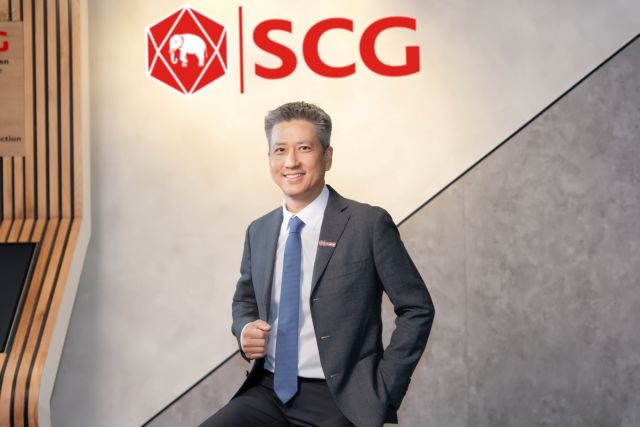
Kulachet Dharachandra, Country Director of SCG, Vietnam
|
Đường Thu Hương, chairwoman of Việt Nam Thai Chamber of Commerce in Bangkok. Photo courtesy of Đường Thu Hương |
The upgrading of Việt Nam–Thailand relations to a Comprehensive Strategic Partnership reflects the deep trust and long-standing friendship between our two countries.
Over the past few decades, Việt Nam has transformed from an import-oriented economy into one of the world’s most dynamic manufacturing and investment hubs.
Today, Việt Nam is entering a new chapter focused on quality, resilience, sustainability and innovation. At SCG, we are honoured to be part of this journey. After 32 years in Việt Nam, the country has become much more than a market for us; it is one of our most important homes outside Thailand and a key pillar of our regional strategy.
What is especially encouraging is that the relationship between our two countries now extends beyond trade and investment into deeper cultural and people-to-people connections.
We see stronger tourism flows, growing business partnerships, and leading Vietnamese companies such as FPT expanding successfully into Thailand. These exchanges create trust and a stronger foundation for long-term collaboration.
Looking ahead, I believe Thai businesses can contribute meaningfully to Việt Nam’s next phase of development, particularly in green innovation, infrastructure, advanced materials, packaging and circular economy solutions.
We also appreciate Việt Nam’s strong momentum in improving the ease, transparency and efficiency of doing business. These reforms send a positive signal to the international business community and reinforce confidence in Việt Nam’s long-term direction.
At the same time, building resilient local supply chains will become increasingly important. At SCG Vietnam, our 28 subsidiaries work with nearly 5,000 Vietnamese suppliers and vendors, representing around 80 per cent of our supplier base. We remain committed to growing together with local partners by strengthening quality, operational capability and ESG standards.
The green transition will also require collaboration across the full ecosystem. Whether in low-carbon cement, green building materials or sustainable packaging, strong cooperation between the Government, local enterprises and foreign investors will be essential for Việt Nam to become a regional leader in green industry and circular economy development.
In addition, technical and vocational skills development will be critical as Việt Nam moves towards higher-value and innovation-driven manufacturing. SCG is ready to continue supporting Vietnamese talent development through training, knowledge sharing and long-term industrial collaboration.
Việt Nam is central to SCG’s ASEAN strategy and one of the group’s most important markets. Our investments here total around US$7 billion, representing approximately 30 per cent of SCG’s total assets.
Beyond the numbers, however, Việt Nam holds much deeper meaning for us. We see Việt Nam as our second home and a strategic hub for manufacturing, innovation and sustainable growth.
Our commitment goes beyond expanding business operations. We are here to grow together with Việt Nam through long-term investment, technology transfer, innovation, local partnerships, talent development and ESG leadership.
As Việt Nam advances towards a higher-income, greener and more innovation-driven economy, SCG remains committed to supporting that journey through low-carbon operations, renewable energy, green products, digital transformation, automation and AI-enabled solutions.
For SCG, Việt Nam will continue to be one of our most important long-term growth engines and strategic partners in ASEAN.
- 07:15 27/05/2026