Companies required to pay recycling fees based on waste output
Companies required to pay recycling fees based on waste output
From May 25, producers and importers in Vietnam will be required to meet mandatory recycling obligations for products and packaging placed on the market, either by organising recycling activities themselves or making financial contributions to the Vietnam Environmental Protection Fund.
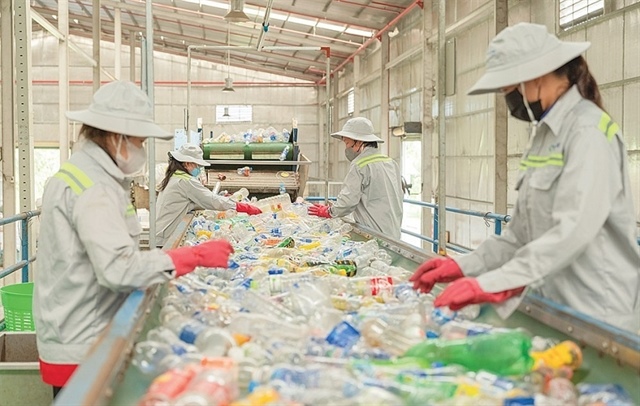
Photo: vir.com.vn |
According to data from the World Bank and Vietnam’s Ministry of Agriculture and Environment, the country generates around 3.5 million tonnes of plastic waste annually, but only 33 per cent is recycled. Average plastic waste generation is estimated at 37-41kg per person each year.
Around 65 per cent of plastic waste in Vietnam is at risk of leaking into rivers, lakes, canals, and seas, or being discharged directly into the environment, causing pollution to land, water, and air.
To encourage the circular economy and strengthen environmental protection, the government has issued Decree 110/2026, introducing extended producer responsibility regulations requiring producers and importers to recycle products and packaging placed on the market according to mandatory rates and specifications.
The regulation covers a broad range of products, including paper, plastic, metal and glass packaging, tyres, electronic devices, batteries, accumulators, and lubricants.
The obligation applies not only to manufacturers themselves, but to companies outsourcing production or authorising imports.
Mandatory recycling rates are calculated based on the minimum proportion of products or packaging that must be recycled relative to the total volume placed on the market during the year.
For example, aluminium packaging and rigid PET plastics are subject to a mandatory recycling rate of 22 per cent, while paper, carton, and ferrous metal packaging are set at 20 per cent. This means a company selling 100 tonnes of aluminium or PET packaging annually must recycle at least 22 tonnes.
For household electronic devices, mobile phones face the highest recycling requirement at 15 per cent, followed by computers, printers, and photocopiers at 9 per cent. Lead-acid batteries and rechargeable batteries, excluding lithium and nickel-metal hydride batteries used in transport vehicles, are subject to rates ranging from 8-15 per cent.
The recycling rates will be reviewed and adjusted every three years, with the first revision scheduled for 2029.
Producers and importers may choose between two compliance methods. Companies can organise recycling activities themselves, hire professional recyclers, or authorise intermediary organisations to collect and recycle products on their behalf. Recycling plans and annual reports must be submitted via the National Information System before April 1 each year.
Alternatively, businesses that do not organise recycling directly may fulfil their obligations through financial contributions to the Vietnam Environmental Protection Fund to support recycling activities nationwide.
Contribution levels are calculated based on the volume of products placed on the market, mandatory recycling rates, and standard recycling costs per unit. Payments must be made annually before April 20.
The decree also includes exemptions aimed at supporting small and medium-sized enterprises. Producers and importers with annual revenue of less than $1.2 million from products and packaging subject to recycling obligations will be exempt. Products manufactured for export or temporary import for re-export are also excluded from the requirements.
- 18:36 07/05/2026