Vietnam’s garment sector shows resilience despite headwinds
Vietnam’s garment sector shows resilience despite headwinds
Vietnam’s garments and textiles industry posted a resilient performance in the first quarter of 2026, with export turnover exceeding $8.8 billion. However, geopolitical uncertainties are posing significant challenges to the industry’s full-year target of nearly $50 billion.
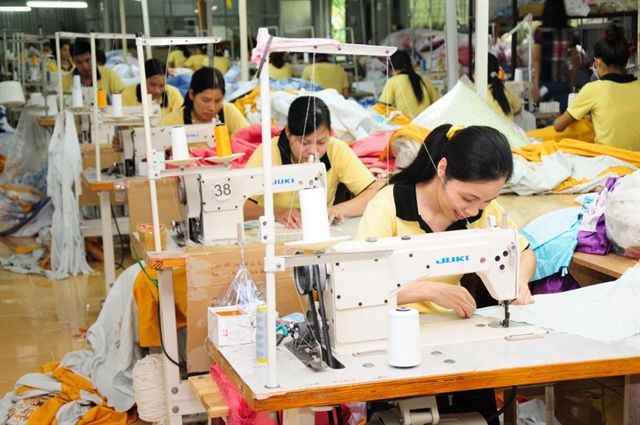
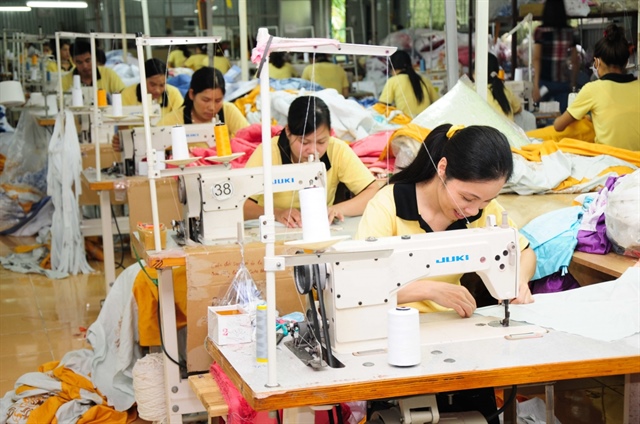
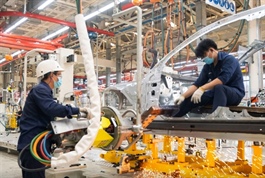
Vietnam’s garment exporters accelerate production to fulfil orders in early 2026. Photo: Shutterstock |
According to the National Statistics Office, garments and textiles exports in Q1 rose 1.9 per cent on-year, reflecting the sector’s ability to adapt swiftly to external shocks. Early order acquisition and proactive market engagement have helped many enterprises secure contracts through the third quarter of 2026.
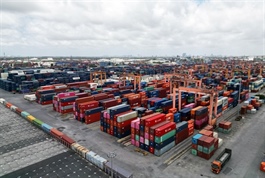
However, the Vietnam Textile and Apparel Association (VITAS) warned that the ongoing Middle East conflict and instability in the Red Sea are exerting heavy pressure on the sector. Shipping routes have been rerouted via the Cape of Good Hope, extending delivery times to the EU and the US by 14–20 days. Container freight rates to the US East Coast have surged from $2,000 to $4,000.
Rising input costs, driven by higher oil prices, have pushed up the cost of synthetic fibres and dyes. This has dealt a blow to profit margins, particularly as cut-make-trim prices remain under pressure from buyers.
The sector’s dependence on imported materials, accounting for over 70 per cent also exposes manufacturers to supply disruptions when overseas shipments are delayed due to maritime congestion.
Still, Vietnam retains competitive advantages in meeting environmental, social, and governance standards, as well as its deep integration into global supply chains.
For 2026, the garments and textiles industry is targeting export turnover of $49–50 billion, representing a projected growth of around 6 per cent compared to 2025. To achieve this, VITAS recommends that enterprises adopt more flexible strategies amid ongoing geopolitical volatility.
Diversifying markets and supply sources is seen as critical. Companies are encouraged to reduce reliance on Red Sea shipping routes and tap into ASEAN and neighbouring markets to lower logistics costs.
Sustainability is also emerging as a key differentiator. Investment in ESG standards and traceability systems is no longer optional, but essential for accessing high-end markets such as the EU.
Meanwhile, the adoption of AI and automation is being accelerated to improve productivity and offset rising logistics expenses. The industry is also prioritising the development of domestic raw material supply, including investment in concentrated textile and dyeing industrial zones to boost localisation and reduce geopolitical risks.
Enterprises are also advised to adopt more flexible negotiation strategies, such as shifting from CIF to free on board terms or sharing freight costs with partners to ease financial burdens.
Truong Van Cam, vice chairman of VITAS, noted that global textile demand grows by only 2–3 per cent annually, intensifying competition among exporting countries.
“Vietnam’s textile industry can no longer rely on volume-driven growth. Improving growth quality is essential, starting with the development of domestic materials, followed by product upgrading and value addition,” he said.
The year 2026 is shaping up as a pivotal period of “adaptive resilience” for the industry. While short-term orders remain stable, businesses are increasingly aware of dual risks stemming from geopolitical tensions and shifting trade dynamics.
Rather than focusing solely on maintaining order volumes, many companies are pivoting towards higher value-added strategies, investing in technology and strengthening domestic supply chains. Reducing dependence on imported inputs will not only optimise production costs but also help meet stringent rules of origin under next-generation free trade agreements, thereby maximising tariff advantages.
While the $8.8 billion export figure in Q1 provides a solid foundation, sustaining growth amid unpredictable geopolitical conditions will require coordinated efforts between policymakers and businesses.
VITAS has called on authorities to stabilise energy and fuel supplies to ease cost pressures. In addition, Vietnam’s trade offices abroad are urged to enhance market intelligence, particularly in geopolitically sensitive regions, enabling enterprises to adjust logistics and production strategies
- 10:24 08/04/2026