Tighter bank financing to drive divergence in housing supply mix
Tighter bank financing to drive divergence in housing supply mix
Stricter bank lending conditions in 2026 are expected to widen disparities in housing supply mix, financing structures, and credit profile of developers.
|
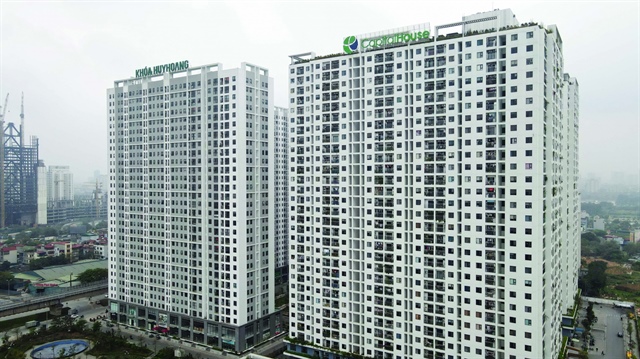
According to a report by VIS Rating on April 20, policy focus is expanding from increasing supply to pushing affordable housing development and improving market transparency.
Specifically, the forthcoming government resolution on commercial affordable housing will lower land‑use costs and cap the profit margin of 15 per cent in this segment to keep selling prices more affordable, enhancing housing options for low‑ to middle‑income buyers.
Decree No. 357/2025/ND-CP introducing unique identification codes for real estate will improve land and housing management efficiency for authorities and reduce legal disputes and transaction risks for buyers.
The report indicates that sharply higher mortgage rates alongside elevated property prices, compounded by a wave of new supply, will weigh on homebuyer demand.
The condo absorption rate decreased to 95 per cent in 2025, reflecting more cautious buyer sentiment amid elevated condo prices. Driven by policy support, new supply in Hanoi and Ho Chi Minh City increased by 22 per cent in 2025 and will remain substantial in 2026 from a mix of luxury urban launches, suburban mid-to-high-end mega projects, and social and affordable housing.
Average mortgage rates in 2026 are expected to be 3-4 per cent higher than in 2025, driven by rising deposit rates and tightening room for real estate credit. As a result, prices and transaction volume will weaken in 2026, prompting developers towards lower-priced segments.
In addition, after surging by 36 per cent on-year in 2025, State Bank of Vietnam (SBV) signalled plans to curb overheating in real estate bank credit growth at the overall credit growth quota of 15 per cent in 2026, constraining developers’ access to bank financing. With bank credit growth tightening under the SBV's direction, developers are expected to rely more on bond issuance, equity raising, and M&A to meet funding needs.
Indeed, real estate bond issuance reached VND129 trillion ($4.96 billion) in 2025, up 40 per cent on-year. This momentum will continue in 2026, driven by higher bond refinancing need, while more developers will tap the bond market to fund new projects.
Robust equity and M&A markets in 2026, driven by equity market upgrade and strong sentiment of foreign developers, will support developers' funding needs. In 2025, registered foreign-invested real‑estate capital reached $7.1 billion (up 13 per cent on-year), while equity raised increased by 34 per cent.
Against the backdrop, credit profiles will diverge further as large developers with strong handover pipelines should remain resilient, while those facing ongoing legal issues or deeply entangled in hospitality projects will continue to face liquidity pressures in 2026.
- 17:04 23/04/2026