HCM City prepares growth scenarios amid global uncertainty
HCM City prepares growth scenarios amid global uncertainty
HCM City authorities are preparing for rising global economic uncertainty by developing multiple growth scenarios aimed at maintaining economic momentum while pursuing an ambitious target of double-digit expansion in 2026.
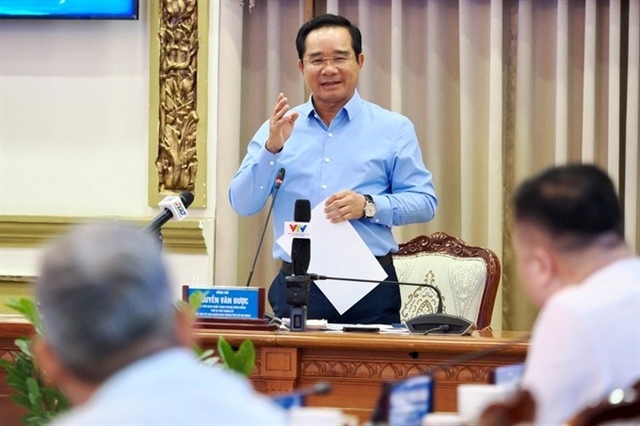
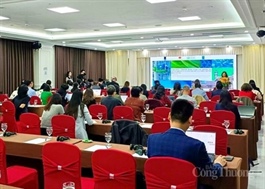
Nguyễn Văn Đượcc, chairman of HCM City People’s Committee, speaks at a workshop on Friday to discuss sustain economic growth in HCM City amid global economic uncertainties. — VNA/VNS Photo |
The scenarios were discussed at a policy workshop hosted by the municipal government on Friday, where experts and officials discussed solutions to sustain growth while ensuring energy stability amid geopolitical tensions and volatile global markets.
As Việt Nam’s largest economic and commercial centre, HCM City is particularly exposed to external shocks. Global geopolitical conflicts, fluctuating energy prices and shifting monetary policies in major economies are creating pressure on trade, investment and financial markets.
Phạm Bình An, deputy director of the HCM City Institute for Development Studies, said the global economy is currently facing a series of unpredictable risks. Escalating geopolitical tensions, especially in the Middle East, could disrupt global shipping and aviation routes, driving up logistics and energy costs.
If conflicts persist, global energy prices could rise sharply, adding to inflationary pressure and increasing production costs for many economies. Higher prices for oil, coal and other fuels could also weaken global consumer demand.
Supply chains could face further disruption if international logistics networks are affected by tighter controls or operational interruptions, potentially slowing global trade and manufacturing activity.
Việt Nam’s open economy means global shocks can quickly affect domestic conditions through several channels, including energy prices, exchange rate movements and international capital flows.
“When oil prices rise, domestic production costs also increase, placing pressure on inflation,” he said.
“Exchange rate volatility may raise import costs, while international capital flows could shift if interest rate differences between the US dollar and other currencies remain high,” he added.
For HCM City, such developments could directly affect key growth drivers, including exports, investment and domestic consumption.
The city’s export sector may face rising logistics costs and weaker demand from major markets such as the US and the EU.
At the same time, higher construction material prices could slow the disbursement of public investment projects, while foreign direct investment inflows may become more cautious amid global uncertainty.
Higher fuel prices could also push up the consumer price index, reducing household purchasing power and dampening domestic consumption as people cut back on non-essential spending.
On the supply side, manufacturers may struggle with rising input and transportation costs, reducing the competitiveness of locally produced goods.
The services sector, including tourism, could also face challenges if international travellers become more cautious due to higher travel costs.
Three growth scenarios
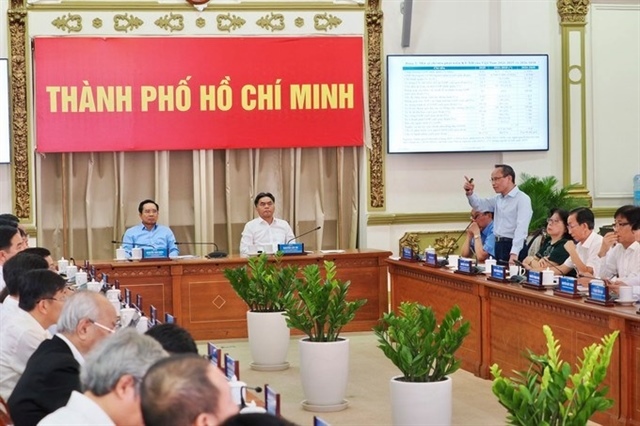
Nguyễn Văn Đượcc, chairman of HCM City People’s Committee, speaks at a workshop on Friday to discuss sustain economic growth in HCM City amid global economic uncertainties. — VNA/VNS Photo |
To prepare for these uncertainties, the HCM City Institute for Development Studies has developed three economic growth scenarios for 2026.
In the first scenario, geopolitical conflicts intensify and persist, weakening global trade and increasing market volatility. Under this scenario, Việt Nam’s economic growth could reach around 7 per cent, while HCM City’s growth in the first quarter of 2026 is projected at about 7.53 per cent.
The second scenario assumes geopolitical tensions ease after a short period, allowing global economic conditions to stabilise. In this case, Việt Nam’s growth could reach around 8 per cent, while HCM City’s first-quarter expansion is forecast at approximately 8.56 per cent.
In a more optimistic scenario where geopolitical tensions subside quickly and the global economy recovers in line with earlier projections, Việt Nam’s growth could reach about 9.1 per cent. Under these conditions, HCM City’s first-quarter growth could reach roughly 9.74 per cent.
Experts say energy prices remain a key variable shaping these projections. According to expert Cấn Văn Lực, a 10 per cent increase in fuel prices could reduce national GDP growth by about 0.5 percentage points.
Despite global uncertainties, HCM City has set a target of achieving economic growth of more than 10 per cent in 2026.
To reach that goal, the city plans to accelerate infrastructure investment, particularly in transport and logistics, while boosting exports, diversifying markets and stimulating domestic consumption.
Authorities are also prioritising high-quality foreign direct investment in high-tech industries, the digital economy and innovation sectors, alongside expanding digital transformation and the use of artificial intelligence in urban management and business activities.
Nguyễn Văn Được, chairman of the municipal People’s Committee, said geopolitical tensions and potential energy shocks could create unpredictable impacts on both the global and domestic economy.
HCM City must therefore prepare for a new period of global uncertainty while turning challenges into opportunities by strengthening new growth drivers such as science, technology, innovation and digital transformation while maintaining traditional engines including investment, consumption and exports, he noted.
Nguyễn Văn Đượcc, chairman of HCM City People’s Committee, speaks at a workshop on Friday to discuss sustain economic growth in HCM City amid global economic uncertainties. — VNA/VNS Photo |
- 14:07 14/03/2026