Việt Nam’s low-altitude economy faces structural challenges
Việt Nam’s low-altitude economy faces structural challenges
Việt Nam’s efforts to develop a low-altitude economy (LAE) must go beyond technological experimentation and address deeper issues of governance, regulation and data infrastructure, experts said at a seminar held in HCM City on January 30.
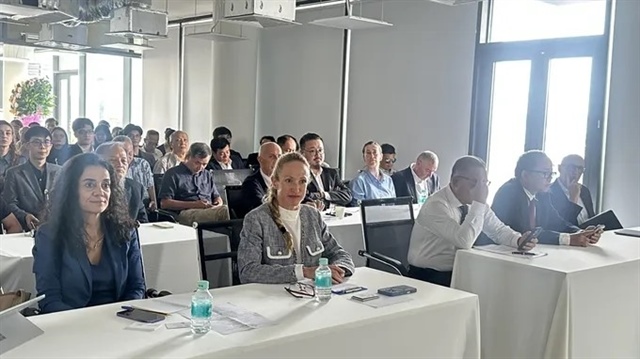
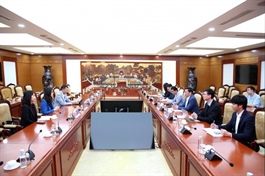
Delegates attend the seminar “Low-Altitude Economy in Việt Nam: Challenges Beyond Technology Towards an Integrated Ecosystem” held in HCM City on January 30. — Photo sggp.org.vn |
The seminar, entitled “Low-Altitude Economy in Việt Nam: Challenges Beyond Technology Towards an Integrated Ecosystem”, was co-organised by HCM City University of Natural Resources and Environment, the Italian Aerospace Network (IAN), the Fourth Industrial Revolution Centre (HCM-I4R) and domestic and international partners.
The low-altitude economy, which has recently gained attention in Việt Nam, is often associated with applications such as delivery drones, urban air mobility, smart logistics and three-dimensional urban planning. In many countries, LAE is viewed as a new layer of economic activity, extending development space from the ground into low-altitude airspace, typically below 1,000 metres.
However, speakers cautioned against viewing LAE primarily as a technological trend.
Instead, it should be considered part of a broader framework of urban and rural spatial governance, with long-term risk management at its core.
Associate Professor Dr Huỳnh Quyền, president of HCM City University of Natural Resources and Environment, said the success of LAE would depend less on aircraft and platforms than on institutional capacity.
“The key lies in how airspace, data and relationships among stakeholders are governed within an integrated ecosystem,” he said.
Việt Nam has taken initial legal steps through regulations such as Decree No. 288/2025/NĐ-CP, Decree No. 125/2015/NĐ-CP and related rules on airspace management and unmanned aerial vehicles.
These instruments provide a basic legal foundation, but remain fragmented and limited in scope.
According to speakers, the greater challenge is to connect legal frameworks with data systems, human resources and innovation policies to create an LAE ecosystem that is safe, efficient and sustainable.
From a legal perspective, Dr Lê Nết of LNT & Partners noted that the Aviation Law 2025, which will come into effect on July 1 of this year, has opened opportunities for low-altitude economic activity, but lacks detailed implementation guidelines.
Drawing on China’s experience, he suggested that pilot programmes could be introduced in HCM City, Đà Nẵng, Huế, Hải Phòng and selected areas of Hà Nội.
International experience shared by the Italian Aerospace Network underscored the importance of integrating technology with institutional design and foundational data.
Applications such as drone logistics, environmental monitoring and smart city services require standardised low-altitude spatial maps, real-time flight management and data-sharing systems, controlled regulatory sandboxes and clear rules on safety, liability and risk.
A recurring theme at the seminar was the State’s central role in shaping the low-altitude economy.
While private enterprises and technology start-ups are expected to drive innovation, low-altitude spatial data and three-dimensional digital infrastructure are strategic public assets linked to national security and public interests.
Experts agreed that the State should move beyond a purely licensing role by investing in core data infrastructure, establishing transparent and predictable rules, developing long-term risk governance mechanisms and ensuring that economic development is balanced with environmental protection.
- 11:20 31/01/2026