GEVA a launchpad for Vietnam’s agricultural exports
GEVA a launchpad for Vietnam’s agricultural exports
Green Export Acceleration through Voluntary Sustainability Standards (GEVA) is expected to become a pioneering model that empowers agricultural enterprises to integrate sustainability standards into their business strategies and drive green transformation.
|
As Vietnam deepens its global integration, agricultural businesses are facing increasingly stringent sustainability requirements from major export markets such as Europe, the US, Canada, and Australia. Demands for transparency and sustainable development across supply chains are no longer optional – they have become decisive factors for market access and long-term partnerships.
To accompany Vietnamese enterprises on this journey, the government of Switzerland has funded the GEVA project – Green Export Acceleration through Voluntary Sustainability Standards, an initiative spearheaded by KisStartup.
The project operates within the SwissTrade programme, funded by the Swiss government through the State Secretariat for Economic Affairs (SECO) and jointly managed by the International Trade Centre (ITC) and Vietrade under the Ministry of Industry and Trade. Running from April 2025 to April 2026, GEVA focuses on strengthening the international competitiveness of businesses in the spice, coffee, and nut sectors.
Incubating green exports
GEVA’s core mission is to help Vietnamese agricultural enterprises understand and effectively adopt the model – regarded as the passport for agricultural products to enter developed markets. Through this, businesses not only meet international buyers’ requirements but also build sustainable business models that enhance long-term competitiveness.
The project comprises four key components. Businesses can access greenexport.vn to self-assess their export readiness, compliance, and adaptability towards green business models. Upon completion, they receive a detailed report highlighting strengths and areas for improvement, enabling them to design a roadmap for international market entry.
This is Vietnam’s first digital toolkit designed for such comprehensive measurement, allowing enterprises to track progress over time and continuously improve.
Secondly, GEVA has organised multiple training sessions on green exports and sustainable business models in Hanoi, Ho Chi Minh City, and Ben Tre, attracting over 400 participating enterprises. The programme will soon expand to Dak Lak and Gia Lai, bringing practical tools and knowledge closer to local farmers and businesses, particularly in the coffee, pepper, and cashew industries.
The third aspect is a green export incubation and acceleration programme, GEVA’s most distinctive component. Twenty-three selected enterprises will participate in a six-month incubation and acceleration journey.
The training and consulting content is tailored to each enterprise, based on real data collected through interviews, on-site assessments, and the online toolkit. Each enterprise will receive weekly one-on-one mentoring from experts to address challenges in production, business, and implementation.
During the programme, businesses also review and adjust their business models towards sustainability – fostering internal transformation instead of passive compliance with buyer requirements. Moreover, enterprises will receive guidance on export branding to prepare for exporting under their own labels rather than merely supplying raw or semi-processed materials.
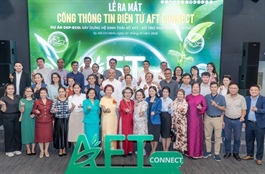
Finally, GEVA organises hybrid (in-person and online) business networking events connecting Vietnamese exporters with importers in key markets such as the EU, the US, Canada, ASEAN, and the Middle East.
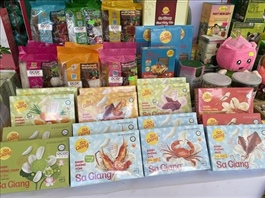
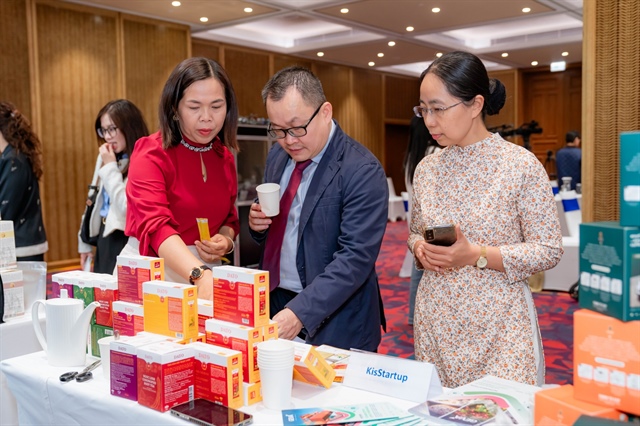
For example, during the Vietnam International Sourcing Expo 2025, GEVA collaborated with the Vietnam Pepper and Spice Association to host a trade connection booth. Seventeen participating enterprises showcased their products and joined seven business-to-business sessions, generating potential partnerships with nearly 70 international buyers.
|

A testing ground for green exports
GEVA stands out for its strong emphasis on practical application and comprehensive enterprise support. Participating businesses not only gain in-depth knowledge on green exports, sustainable business models, and compliance but also receive personalised one-on-one consulting from experts who guide implementation directly within their production and business processes.
Enterprises also have access to a network of international buyers, distributors, and partners in high-demand markets. They can use the online toolkit free of charge to continually measure and improve their readiness for green exports. These benefits equip them not only to seize immediate opportunities, but also to build long-term, sustainable growth foundations.
KisStartup, the implementing organisation, emphasises that GEVA is more than technical assistance – it is a journey of partnership supporting Vietnamese enterprises through their green transformation and export acceleration.
“We encourage Vietnamese agricultural businesses, especially in the spice, coffee, and nut sectors, to actively participate and take advantage of the resources provided by SwissTrade, SECO, ITC, and KisStartup. This is a golden opportunity to break through, position your brands internationally, and contribute to building the image of a green, clean, and sustainable Vietnamese agriculture,” a KisStartup representative shared.
GEVA also serves as a testing model for green export incubation and acceleration – a first-of-its-kind initiative in Vietnam. After the initiative concludes, KisStartup is committed to maintaining and developing this model as a service, ensuring its long-term sustainability and creating lasting value for the agricultural enterprise community.
- 12:03 26/01/2026