Fundamentals required for M&A wins
Fundamentals required for M&A wins
Japanese investors are taking meaningful, strategic steps in the Vietnamese market towards a long-term presence in the market. Masataka “Sam” Yoshida, head of the Cross-border Division at RECOF Corporation, talked with VIR’s Thanh Van about the strategies of Japanese dealmakers in Vietnam.
In what ways are Japanese investors influencing and shaping the trajectory of Vietnam’s merger and acquisition (M&A) recovery?
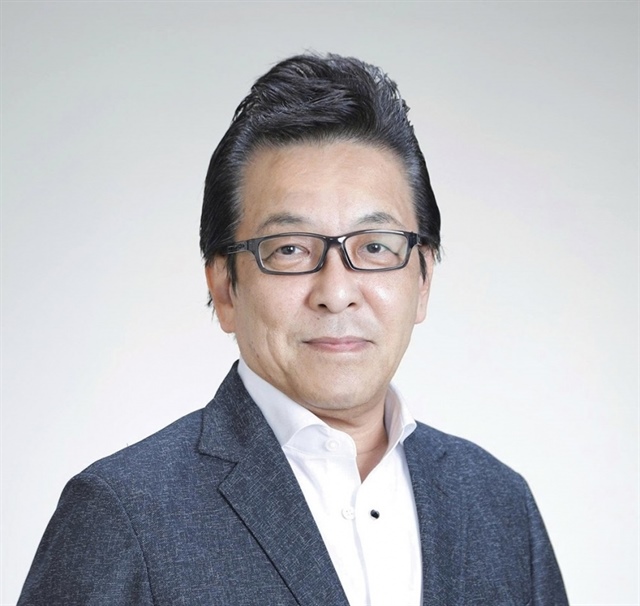
Masataka “Sam” Yoshida |
Japanese companies did have concerns over the impact on the tariff issue on Vietnam earlier this year, but Vietnam emerged from this challenge comparably well to the relief of Japanese companies, especially in manufacturing, which have or are planning more production facilities here.
Generally speaking, the Japanese corporate sector accumulates ample cash in hand estimated at $2.5 trillion, while the domestic market offers limited investment opportunities, Furthermore, in the case of listed companies in particular, their shareholders continue to put pressure on them to grow further.
Japanese companies were not as dynamic in the M&A market as expected in 2025, but we believe their ample funds and confidence in investing in the burgeoning Vietnamese economy substantially supported the growth of the M&A market.
Could you share the pace of Japanese dealmaking activity in Vietnam in comparison with regional peers?
Japanese companies are keeping good pace of M&A activities this year, with the publicly disclosed transactions of 19 until November according to RECOF’s M&A database, with a stable second position after Singapore in terms of M&A investment destination from Japan in the region.
We saw the investment flow into diverse sectors with a wide range of investors in terms of their size. Dynapac (paper packaging), Kawanishi Warehouse (cold storage), and T. Hasegawa (fragrances production) are examples showing that multinationals and conglomerates are not the only investors from Japan. Mid-sized companies (in this case, market cap of $100 million to $1 billion) are more in need of quickly securing positions in Southeast Asia though acquisitions because they were relatively late in expanding outside Japan.
How do Japanese investors navigate Vietnam’s M&A landscape amid global volatility?
Japanese companies remain to be keen in setting up their foothold in Vietnam. The fitness between Vietnam and Japan have been unchanged with the stable long-term government relationship and common cultural factors. As long as the Vietnamese economy remains open to major markets such Europe, America and Southeast Asia, which are also crucial to Japanese companies, they will maintain their investment priority on Vietnam.
More concerning, Vietnam’s M&A market witnesses the increasing competition with the dynamic investors from South Korea, Singapore, Thailand, and others. While keeping the long-term strategic view, Japanese companies are increasingly cautious in taking steps to implement the overseas investment, largely due to strict shareholder requirements on the corporate governance.
In the past decade, Japanese companies learnt a lot about the market environment and business practices in Vietnam and felt comfortable to invest. However, it is challenging to catch up with the rapid pace of the changing market, while competing with the investors from peer countries. Japanese companies should commit to its core competence and long-term strategic view in order to survive and succeed in this market.
Having worked in Vietnam’s M&A market through ups and downs, how do you see Vietnam seeking strategic investment capital from Japan?
The Vietnamese government policies on regulatory reforms are being promoted towards the appropriate directions. For RECOF to successfully support the Japanese investors in transactions, it is essential to have the ability to predict the manner with which the reforms will be implemented in terms of timing and degree/level of such implementation.
One of the practical ways to immediately enhance our ability is to strengthen and enlarge our existing network to the advisory society such as law firms, accounting and tax consultants, as their insights would be indispensable.
This network enlargement should be especially addressed to the local legal community.
What measures are needed to lure foreign investment via M&A to realise Vietnam’s double-digit growth goal next year?
As Vietnam targets high growth, strengthening investor confidence will be essential, and we believe the government is already taking the right steps in that direction.
Firstly, improving policy predictability and legal transparency remains the most impactful measure. Consistent implementation of revised land, housing, and real estate laws, along with clearer guidance on foreign ownership and merger-control procedures, will reduce execution risks. Recent government efforts to streamline approvals and harmonise regulations are positive signals welcomed by foreign investors.
Secondly, enhancing the quality of assets and deal processes is critical. Promoting IFRS adoption, transparent governance frameworks, and professional FA-led preparation will make Vietnamese companies more investment-ready. This aligns well with ongoing initiatives on corporate governance and tax transparency.
Thirdly, long-term fundamentals must continue to be strengthened. The government’s focus on energy security, infrastructure, human capital upgrading, and capital market reform demonstrates a commitment to supporting foreign investment.
- 11:08 08/12/2025