Foreign investors await final instructions to resolve feed-in tariff dispute
Foreign investors await final instructions to resolve feed-in tariff dispute
The government has been urged to issue final instructions to resolve the ongoing feed-in tariff dispute in a manner that ensures compliance with applicable laws and upholds fairness for investors and lenders.
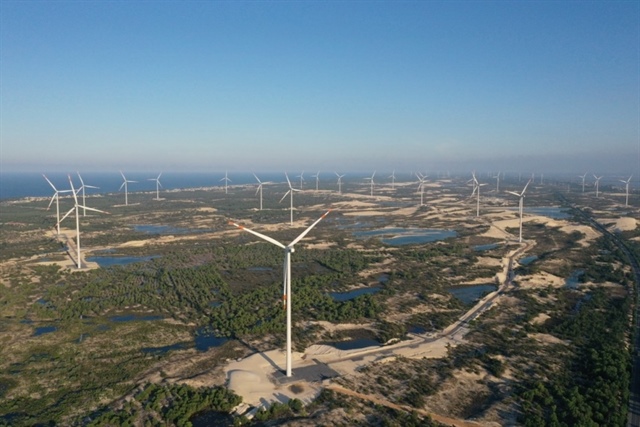
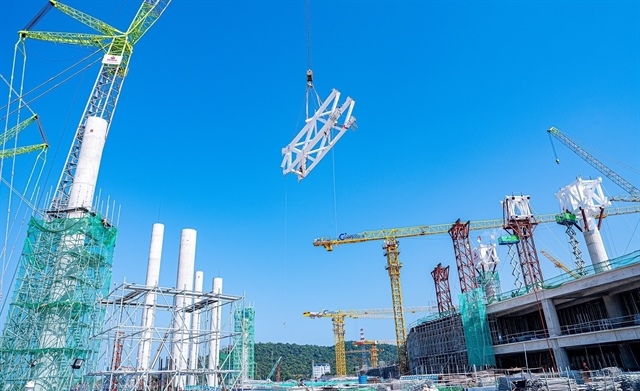
A wind farm in Ha Tinh province |
According to a report compiled by a working group and released at the Vietnam Business Forum 2025 (VBF) on November 10, since the second quarter of 2025, Vietnam Electricity (EVN) has been withholding payments of feed-in tariffs (FITs) to multiple operational wind and solar power projects.
These long-term contracts (often 15–20 years) provide price certainty, and encourage investment in renewable sources like solar and wind power. The cost is typically shared among electricity consumers.
EVN cited non-compliance with certain regulatory requirements, particularly the absence of construction completion acceptance documents at the time of commercial operation, as the basis for its actions.
Investors and financial institutions related to 173 wind and solar power projects have called on the government to maintain the FITs and commercial operation dates previously recognised. The appeal came in a second urgent petition submitted to the government, the Ministry of Industry and Trade (MoIT), EVN, and other relevant agencies.
“However, the affected projects were explicitly considered eligible for FITs under legislation in effect at the relevant time and had entered into power purchase agreements with EVN based on the standard templates issued by the MoIT,” a representative of the working group at VBF.
“While any regulatory non-compliance may be subject to administrative sanctions under Vietnamese law, there is no provision in the applicable legal framework, the signed PPAs, or EVN's commercial operation procedures that support the disqualification of these projects from FIT entitlement on such grounds,” the representative said.
The withholding of FIT payments, and the potential clawback of previously disbursed amounts, has had a material adverse impact on the financial viability of the affected projects, as well as on their investors and lenders. This situation has raised serious concerns among foreign investors and financiers regarding the stability and reliability of Vietnam's investment environment, potentially undermining the country's competitiveness in attracting foreign capital for its energy transition.
To resolve these problems, the working group proposed that all actions taken must be consistent with applicable laws. The legitimate rights and interests of investors, as recognised under binding legislation and duly executed contracts, must be respected and protected.
The group also proposed that any non-compliance attributed to project companies should be addressed through administrative sanctions as prescribed by law, without undermining their contractual entitlements.
“Issues that arise from historical political or policy decisions, including outdated policies that may no longer align with current market conditions, should be treated as internal matters for government review and future policy improvement. However, revisiting binding legislation and retroactively denying investors' legitimate rights and interests recognised under previous laws should be effectively avoided,” the working group said.
- 17:51 14/11/2025